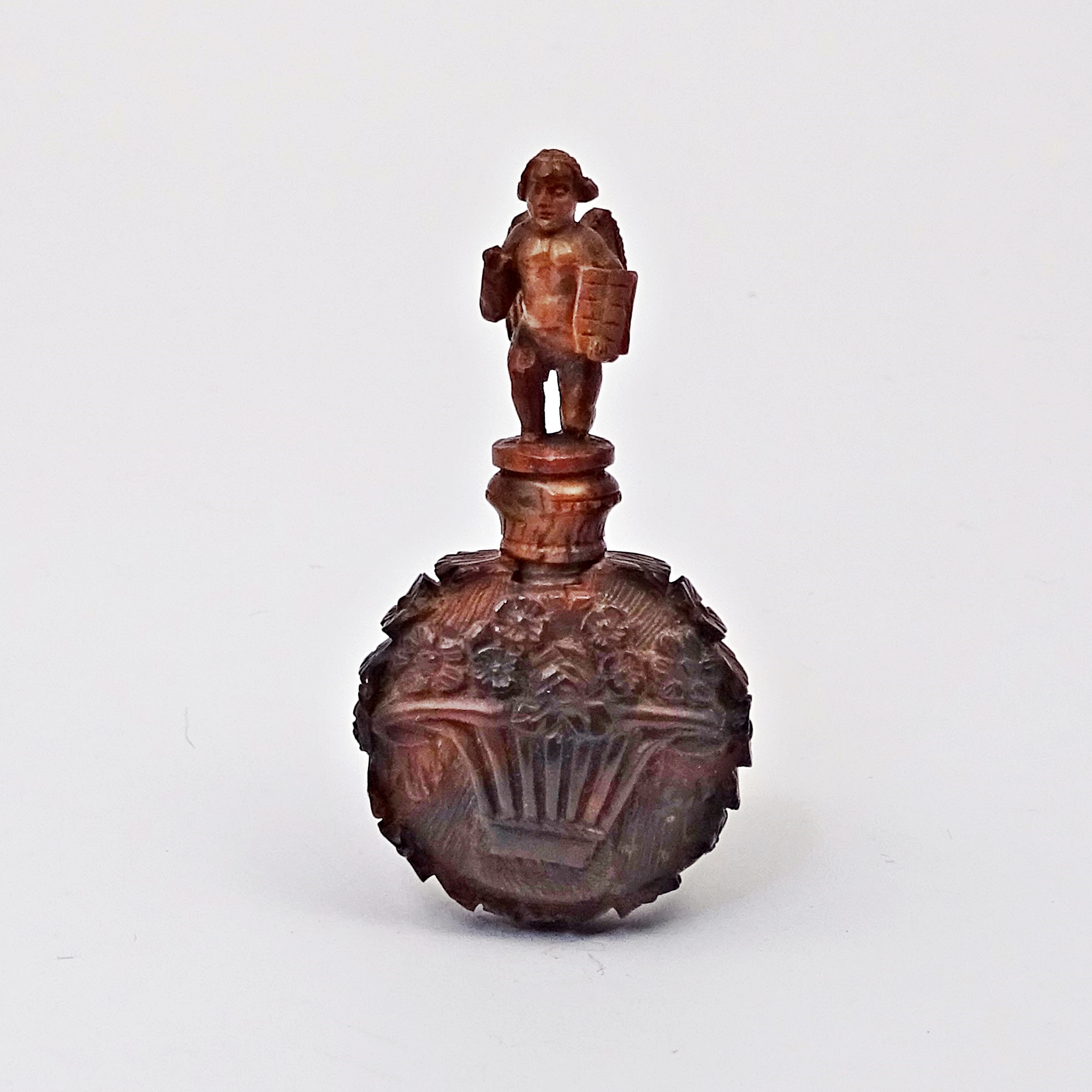
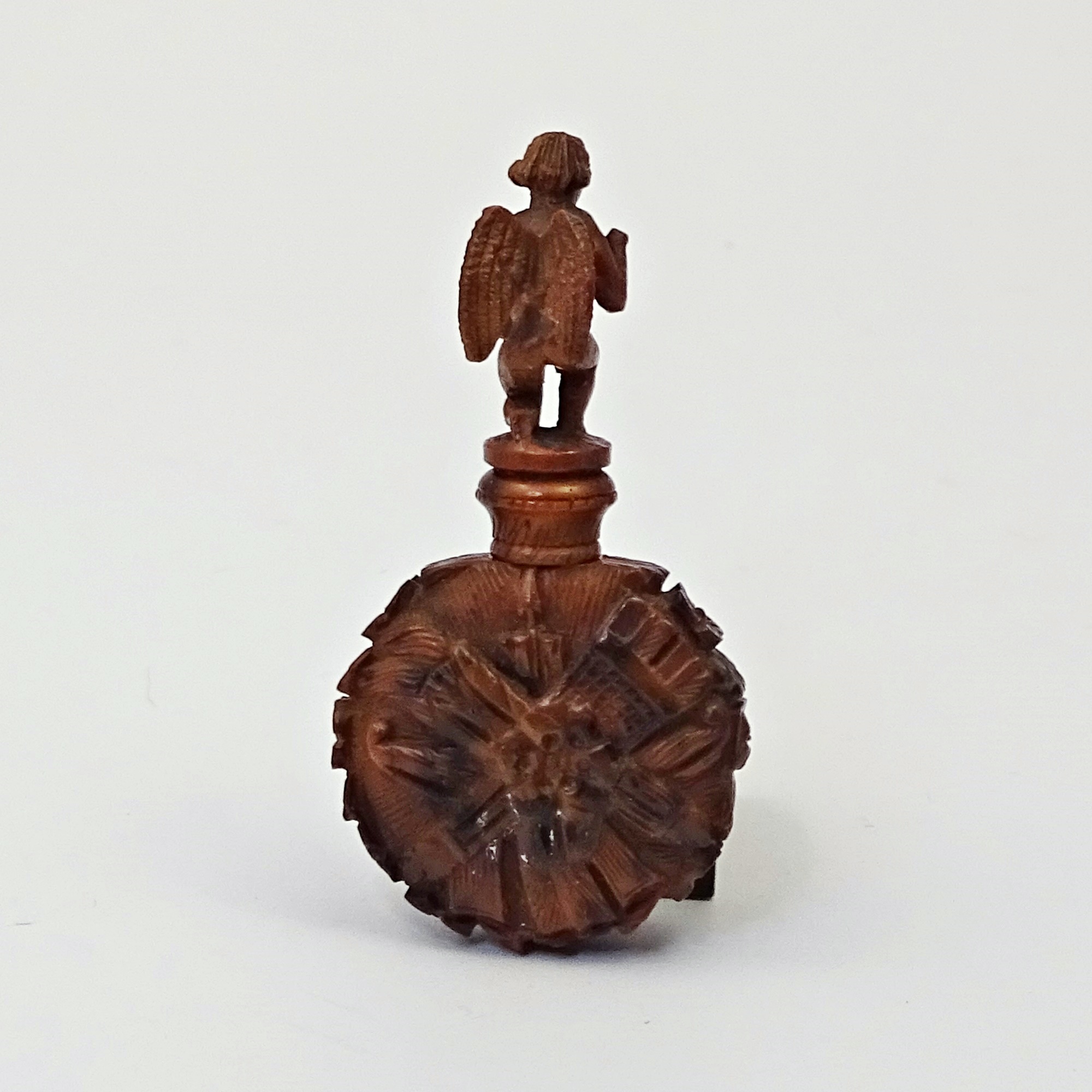
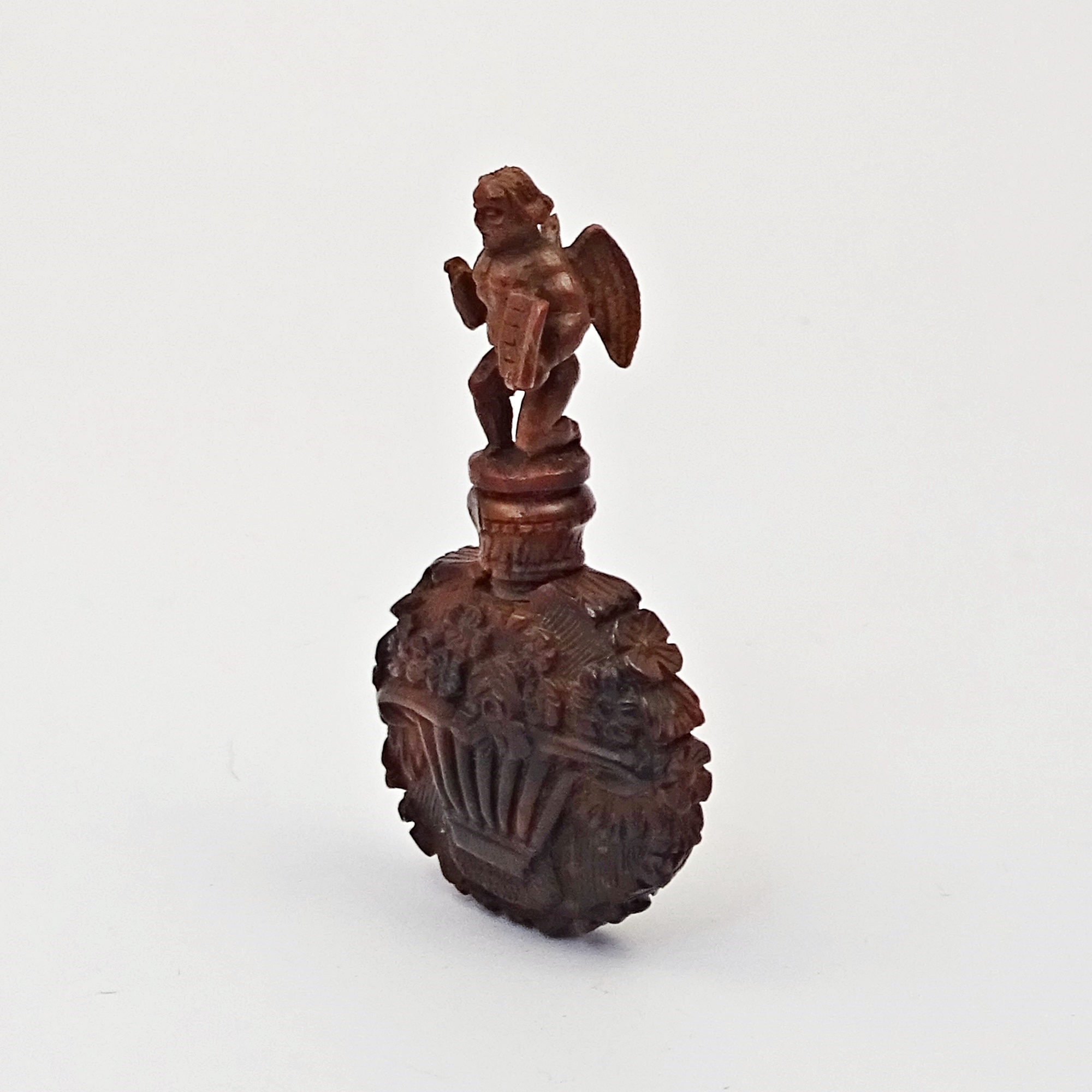
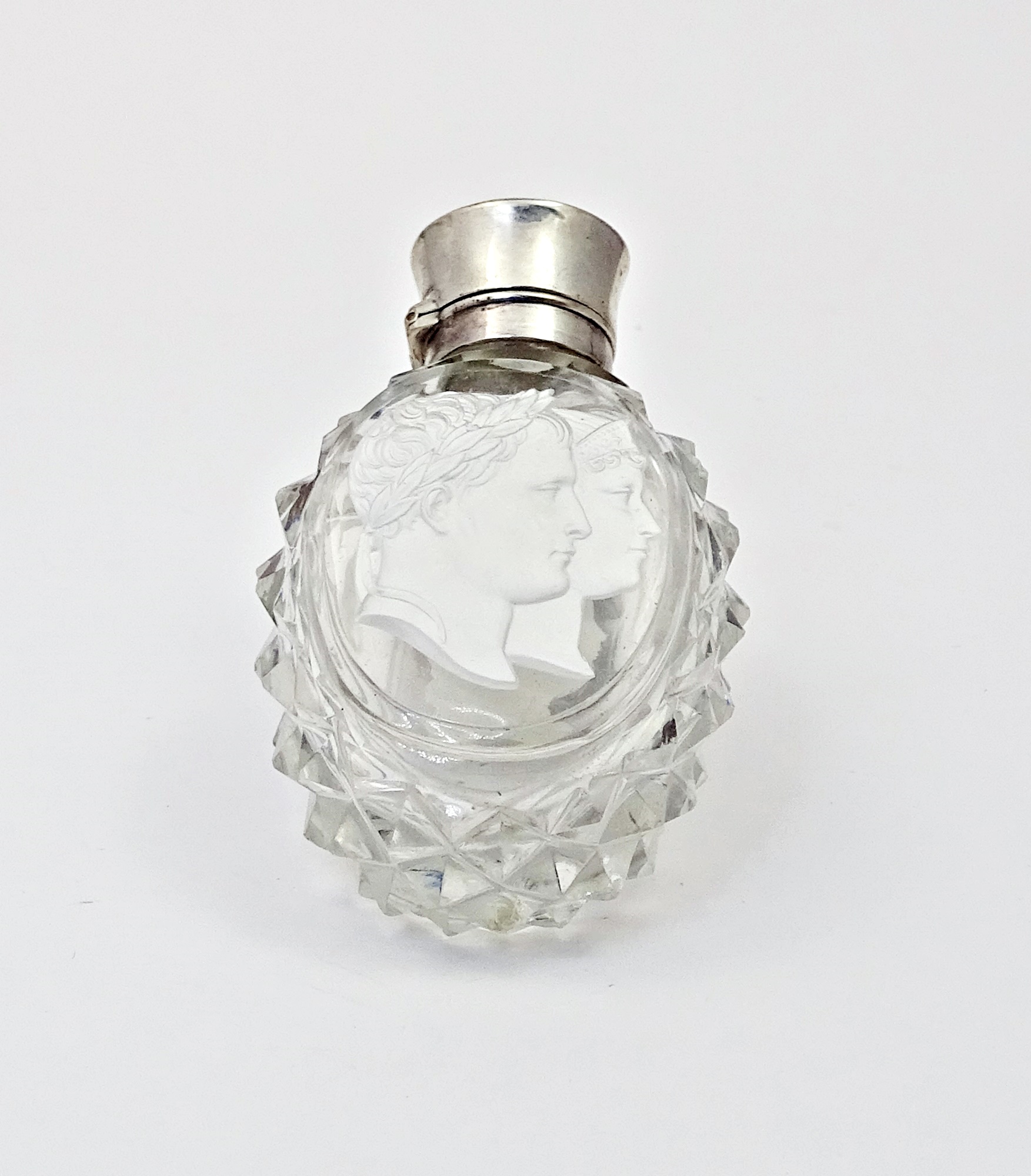
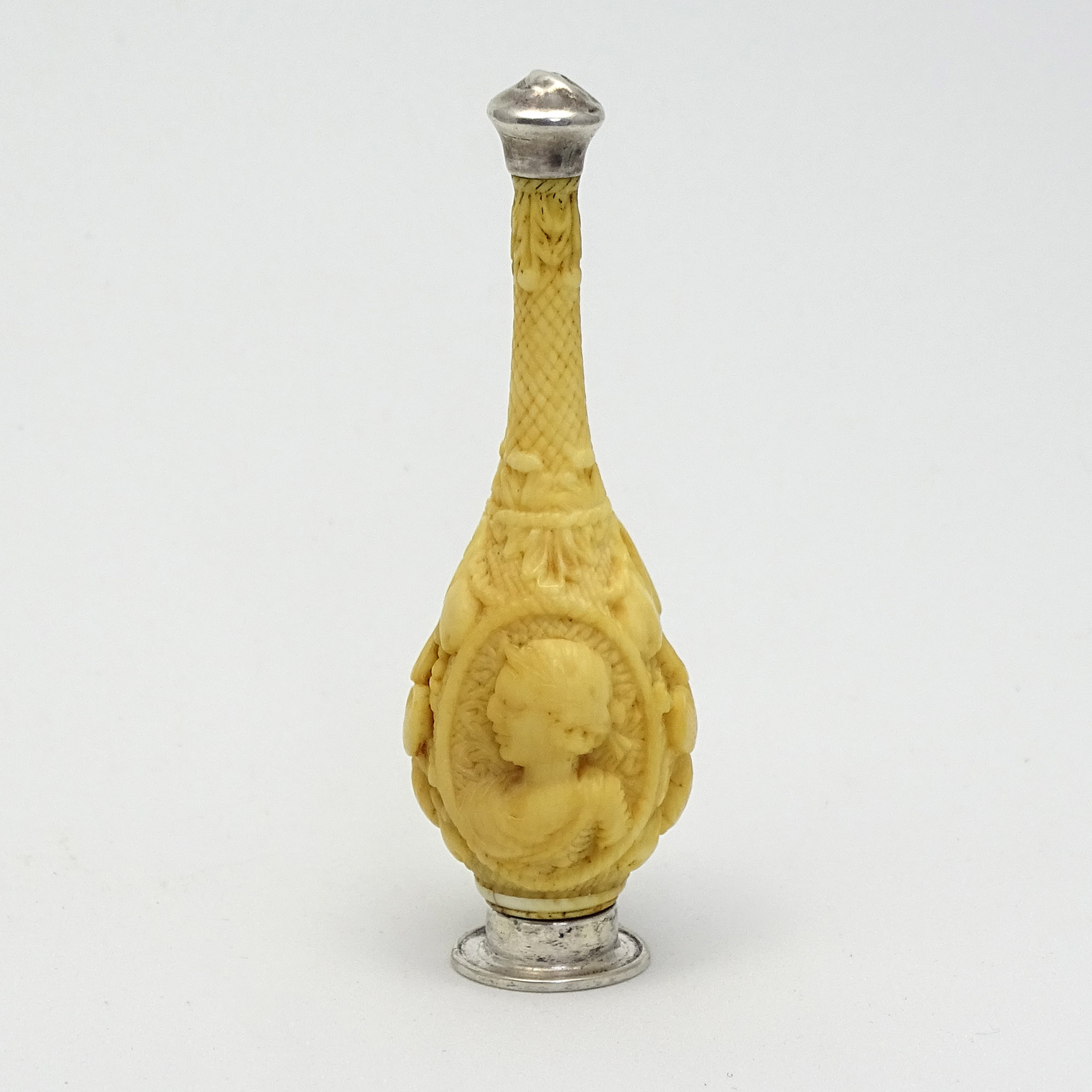
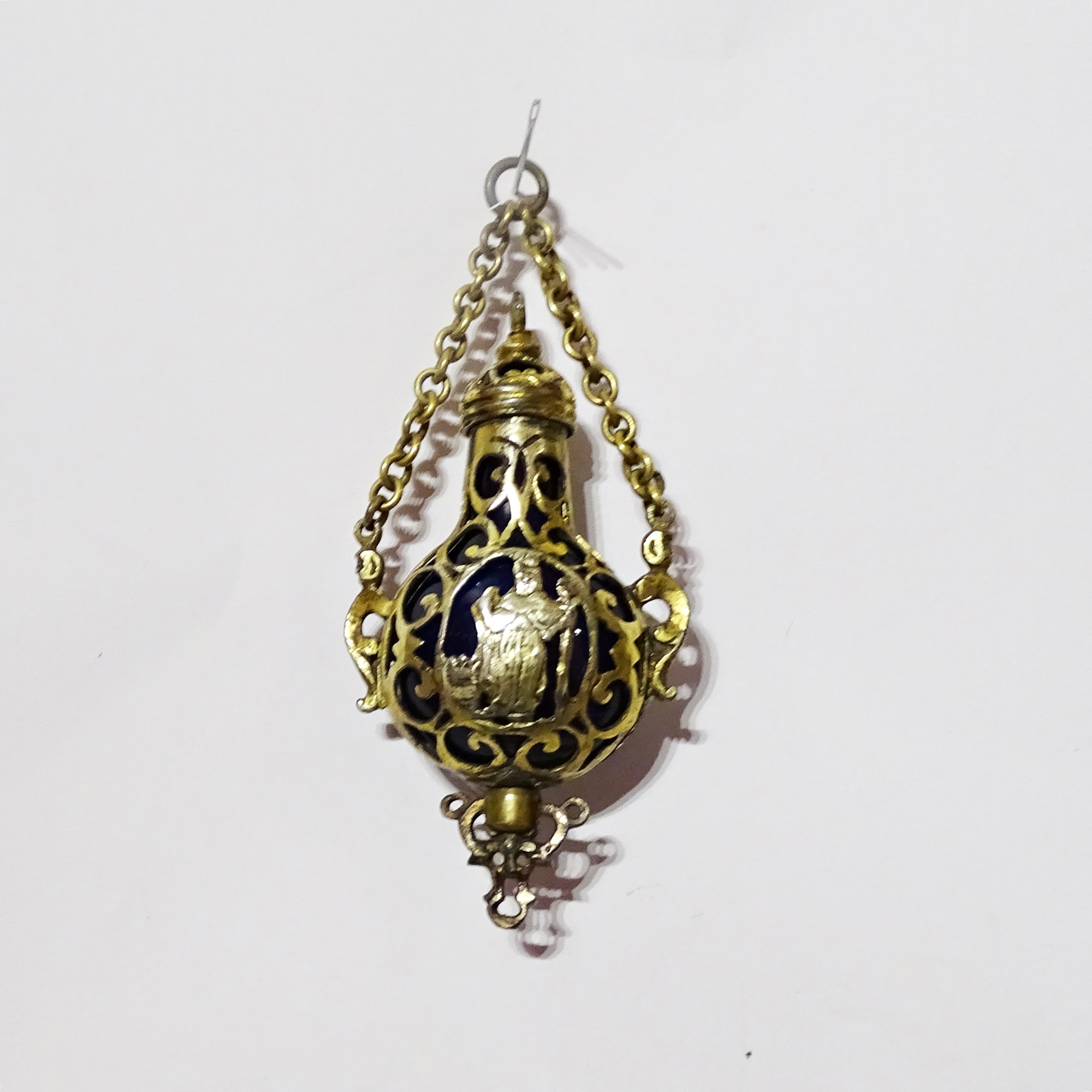
Hand-carved coquilla nut (corozo) scent bottle, showing symbols of love, including a Trophy of Love (a quiver with arrows, cupid’s bow, a flaming torch and roses) and a large Aster Flower (a talisman of love, known as the herb of Venus). Ornamentation books, displaying emblems, patterns, devices and patterns became increasingly popular throughout the 18th century. Similar patterns to the ones found on our scent bottle can be found for example in the book entitled “Nouveau Livre de desseins contenant les Ouvrages de la Joaillerie inventes et dessinés par L. Vanden Cruycen” published in 1770. These publications further fueled demand for specific motifs and patterns, including dogs, cupids, quivers and arrows. The cap is sourmonted by a little angel showing a scroll with lines; the right hand semms to be in a blessing or offering position.
Coquilla nut, sometimes called vegetable ivory, was popular in the late 18th century, early 19th century and used in decorative arts, often carved into a variety of highly ornamental items, including scent bottles. It was worked by sailors or also by convicts; the latter worked to pass the time but mainly to get some money to improve their lives; can also be attributed to sailors during their long journeys. These objects are fine examples of folk art.
Period
18th century
Spain or Portugal, 1800 ca
material of vegetal origin
3 cm d
COD.
772