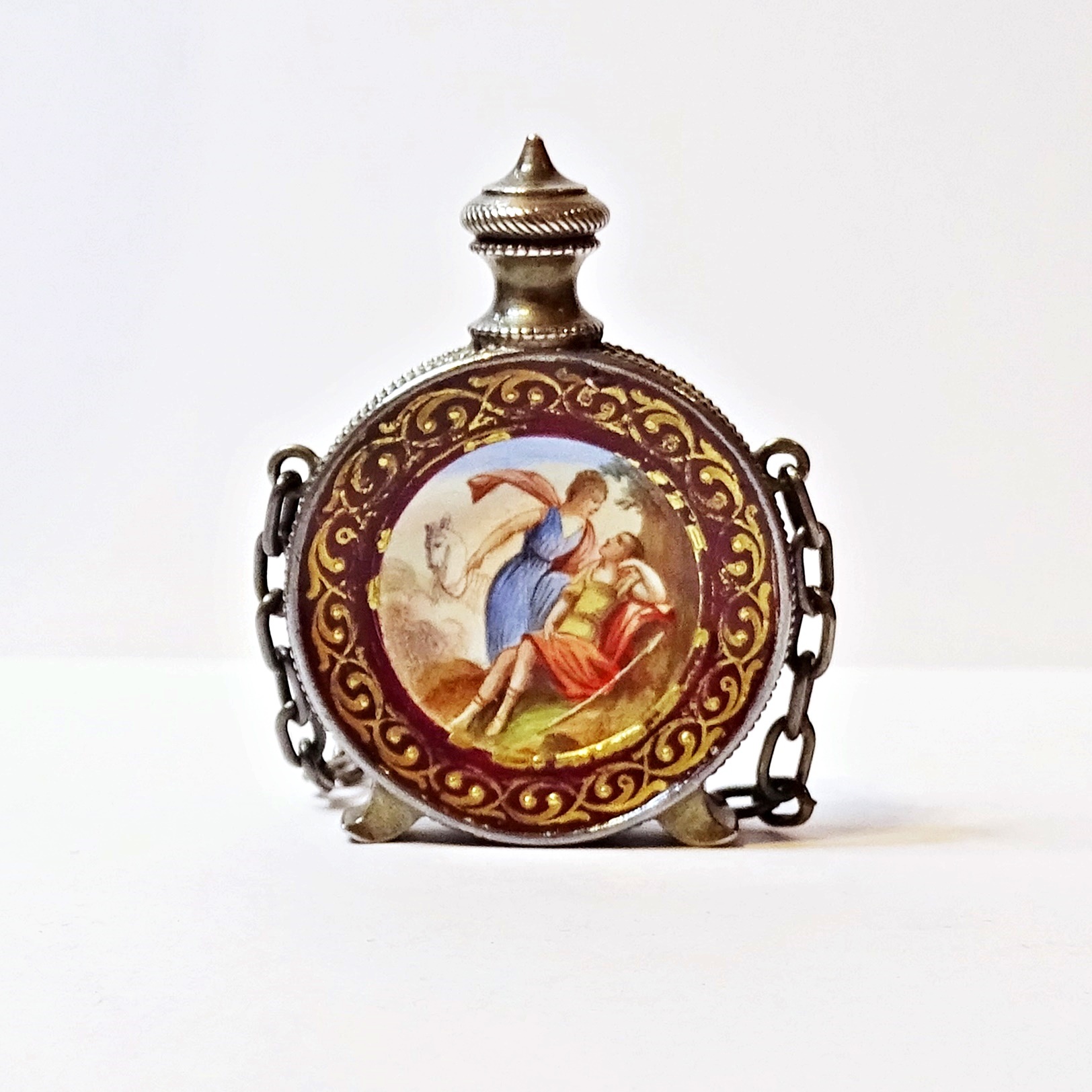
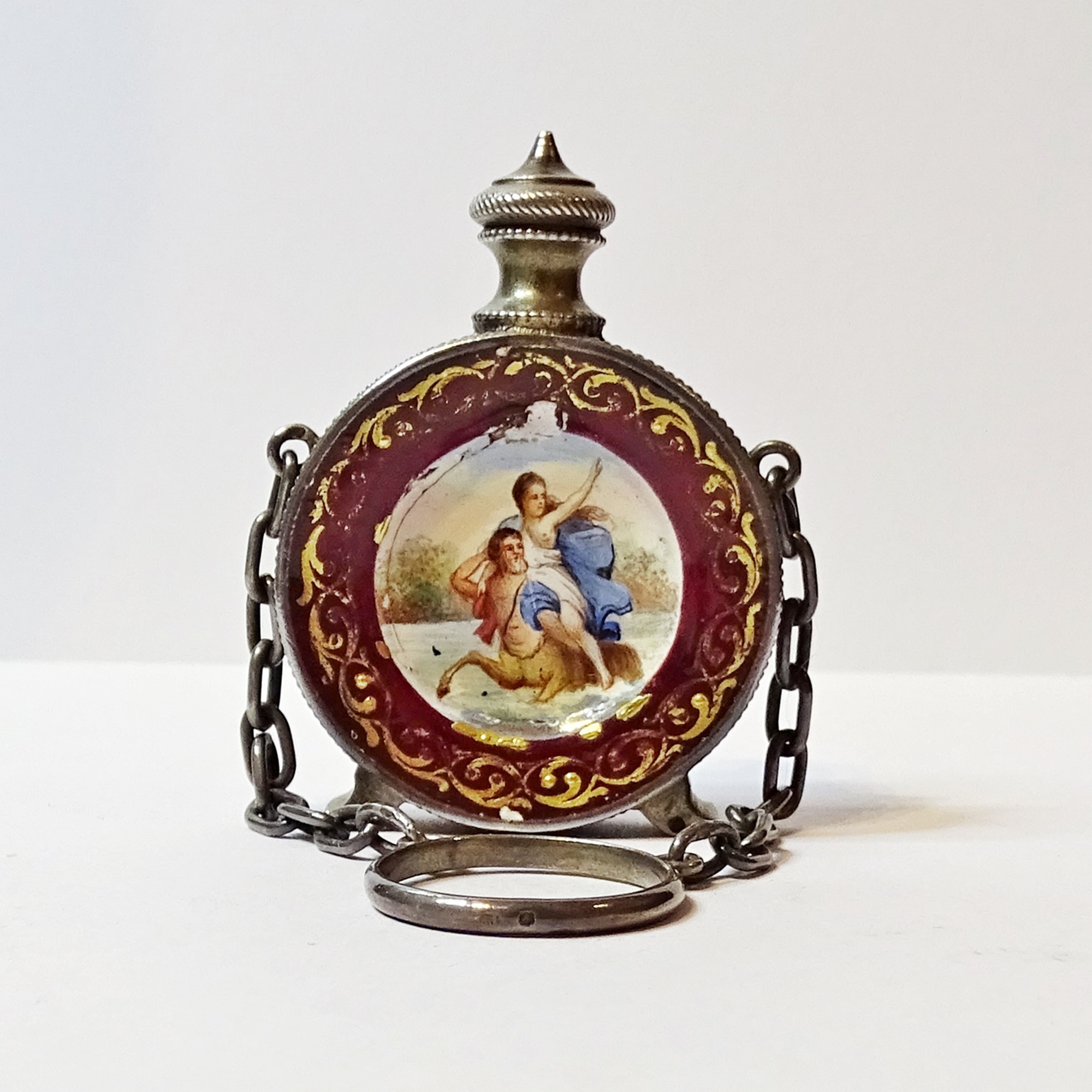
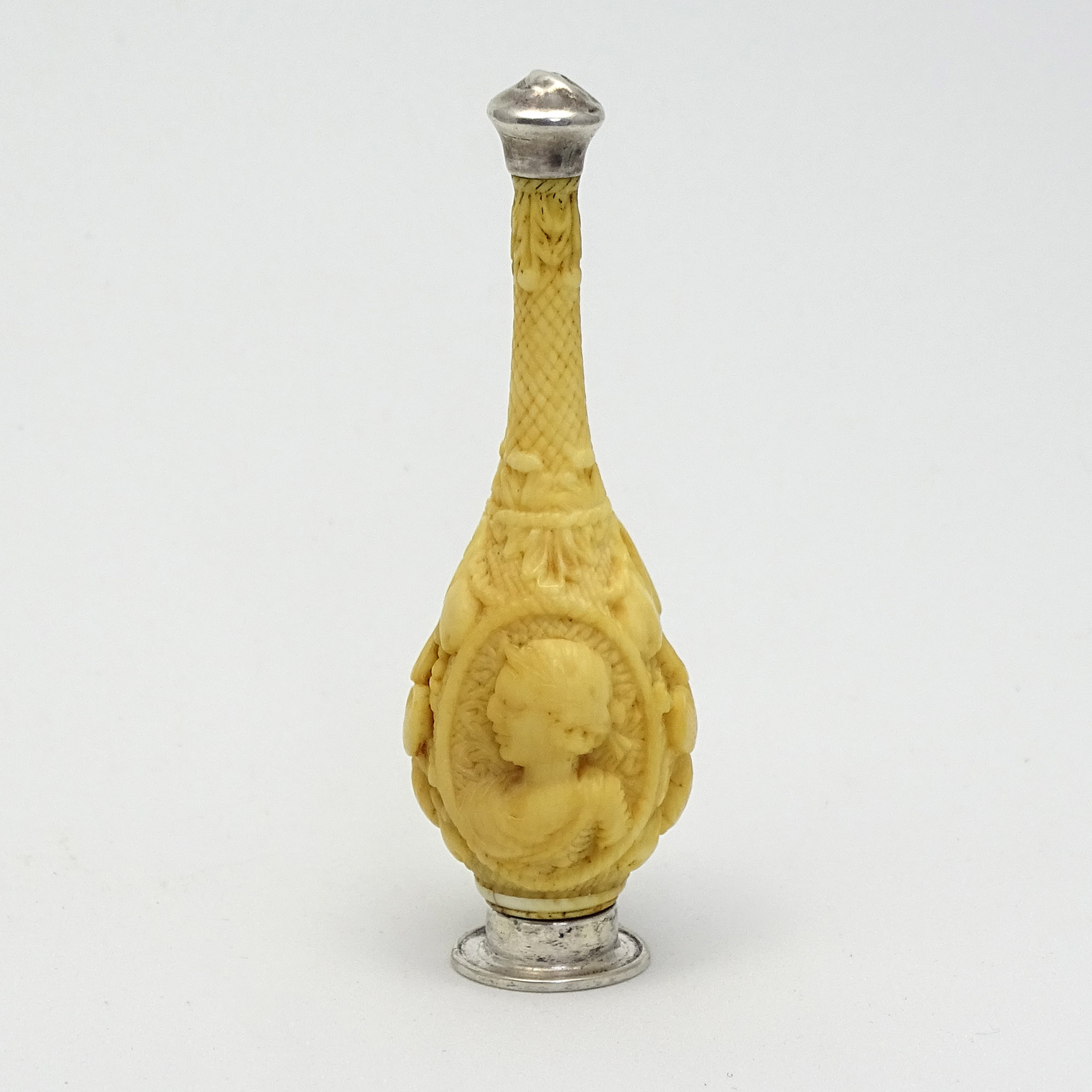
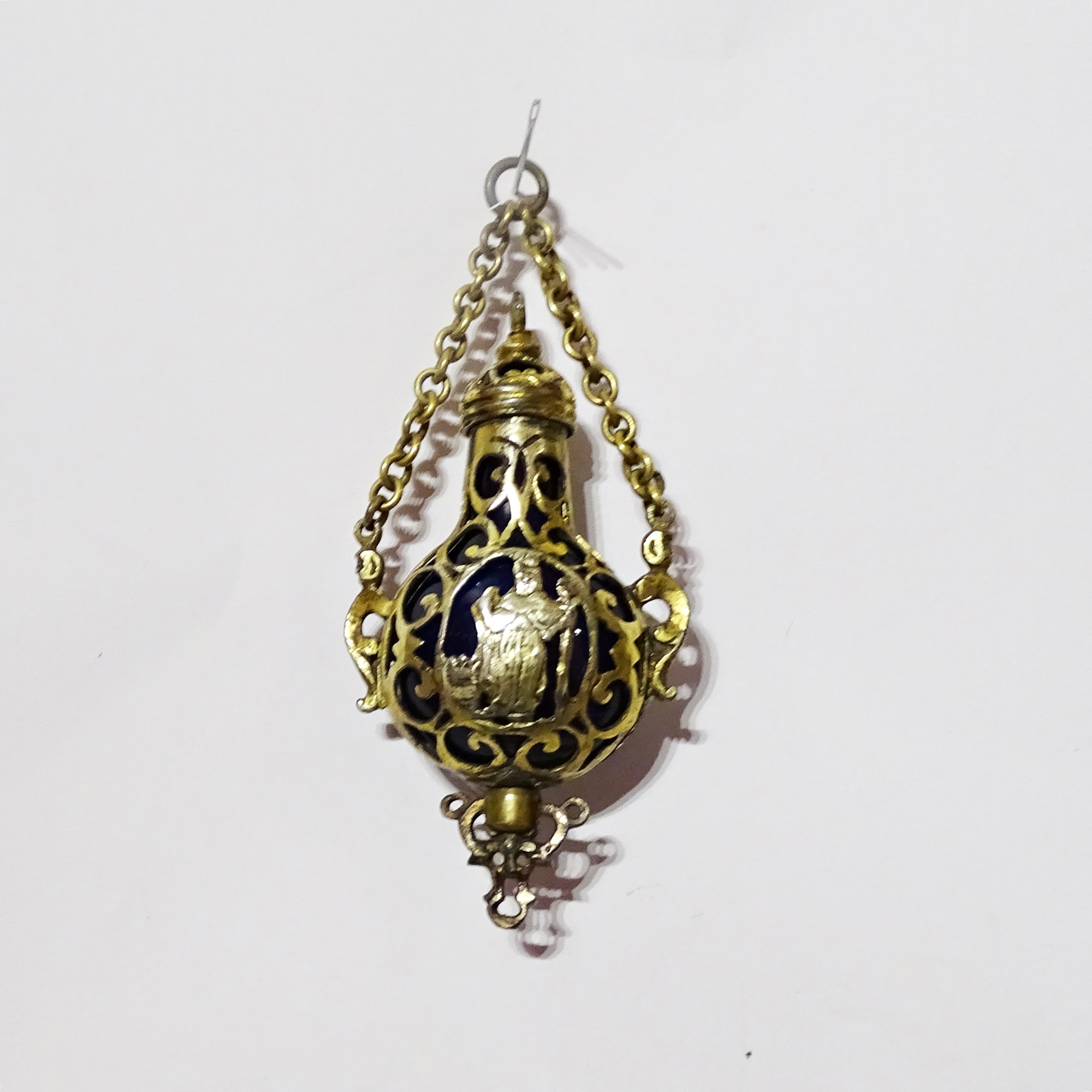
Enamel silver scent bottle showing a classical scene signed by Ludwig Politzer (1841 -1907). Matching silver cap and suspesion chain.
Politzer was one of the most important silversmiths and jewellers working in Vienna in the second half of the 19th century. Although we don’t know much about his life, we know he was born in 1841 in Szeged (Hungary); from 1866 he was in partnership with Hermann Böhm until about 1870. His artworks were exhibited at the International Exhibitions in Paris in 1878 and 1900 where he received a great popularity. He was appointed Imperial Court Jeweller. In 1907 he died in Vienna.
Ludwig Politzer was one of the most significant silversmiths and jewellers active in Vienna during the latter half of the 19th century. Born in 1841 in Szeged, Hungary, he later established himself in Vienna, where he became renowned for his intricate and highly detailed silver and enamelled works. From 1866, he worked in partnership with Hermann Böhm, another notable Viennese silversmith, until around 1870. Politzer’s works were prominently exhibited at international exhibitions, including the Exposition Universelle in Paris in 1878 and again in 1900, where he gained widespread acclaim. His craftsmanship earned him the prestigious title of Imperial Court Jeweller, signifying his association with the Habsburg court. He died in Vienna in 1907.
Politzer specialised in enamelled objects of vertu, silverpieces, nefs (silver ship models used as table ornaments) mostly in a Renaissance Revival style, also called Historismus. All of his artworks bare the maker’s mark ‘LP’.Historismus, or Historicism, developed in the final decades of the 19th century alongside the growth of a national identity in German-speaking Central Europe.Some of his masterpieces are nowadays displayed in the most important international museums of applied arts, such as the V&A museum in London.
Period
Late 19th century
Austria, 1890 ca
enamelled silver or metal
3 cm d
COD.
959