Lava stone is an extraordinary natural material created from the solidification of volcanic magma. It has been used since ancient times for construction, furniture, tools, and jewelry.
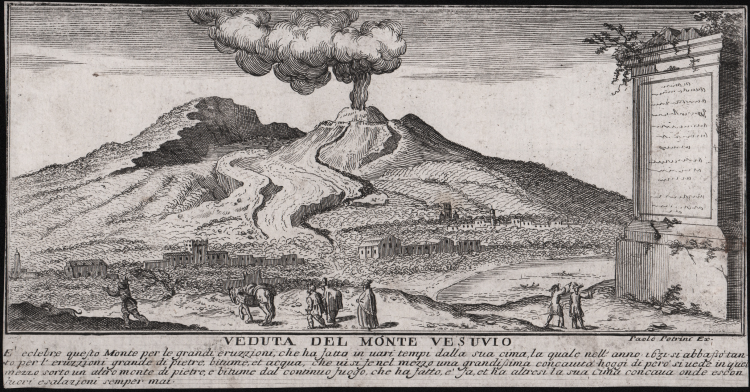
Origin of Lava Stone: Lava stone is formed following volcanic eruptions, when magma cools and solidifies upon contact with air or water. This process occurs primarily in active or extinct volcanic areas, such as Mount Etna, Vesuvius, and Hawaii. Thanks to its natural formation, this material is highly resistant and durable. The ancient eruptions of Vesuvius have created Vesuvian lava stone, a sturdier material than marble: the processing of the lava activity, in fact, has spread in the seventeenth and eighteenth centuries around the Vesuvius area, in the heart of the architectural styles of Baroque and Rococo.
Lava stone, or dyed chalcedony, was used to make jewelry, especially cameos for brooches, bracelets, and pendants. This material is extremely hard to work, so it’s surprising that even small scent bottles, completely hollow inside, were made from it. This production required great skill, patience, and artistic flair and, therefore, they are quite rare. There are two of them in my collection.
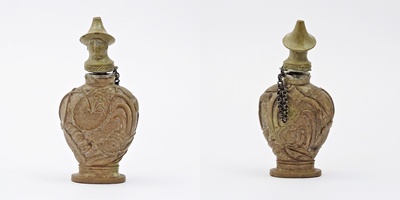
This scent bottle, carved in Lava Stone is made to copy an Asian porcelain, following the tastes of that time and the passion for the Chinoiserie. The floral pattern of the body is inspired by lake plants while the stopper reproduces the appearance of a chinese man wearing a coolie hat. A short chain links the top hat to the bottle. Notice the two different color tones of the natural stone.
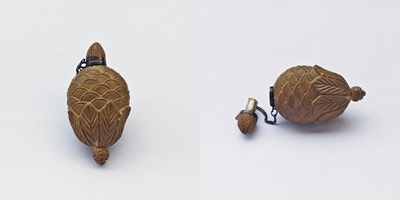
The second one is shaped as a pinecone or a pineapple. In the 18th century the pineapples were status symbols for noble and rich people to show their their chance to have the superfluous and the exotic on their tables and in Naple there was a clever fellow who rented these fruits to use as a center-table for important dinners.