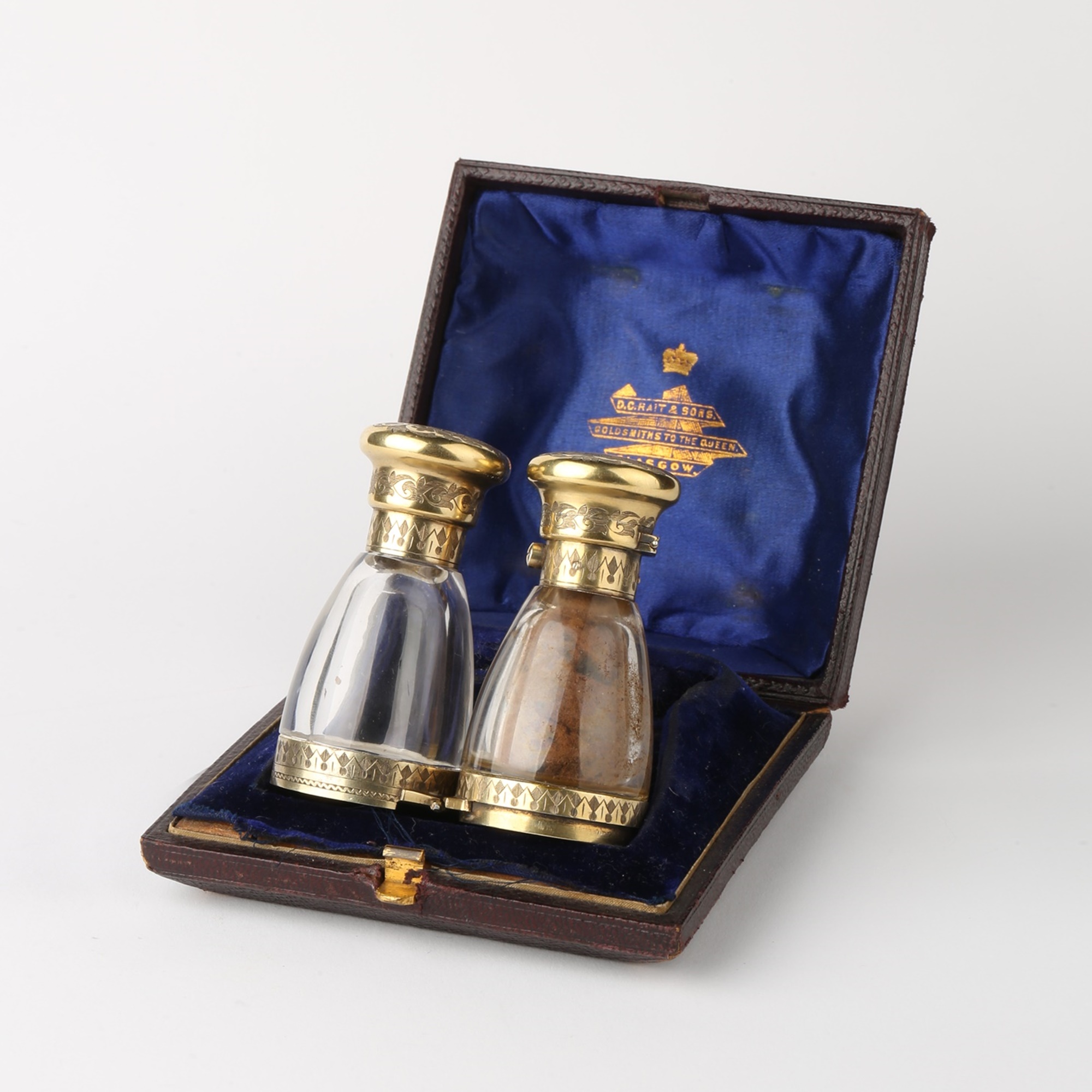
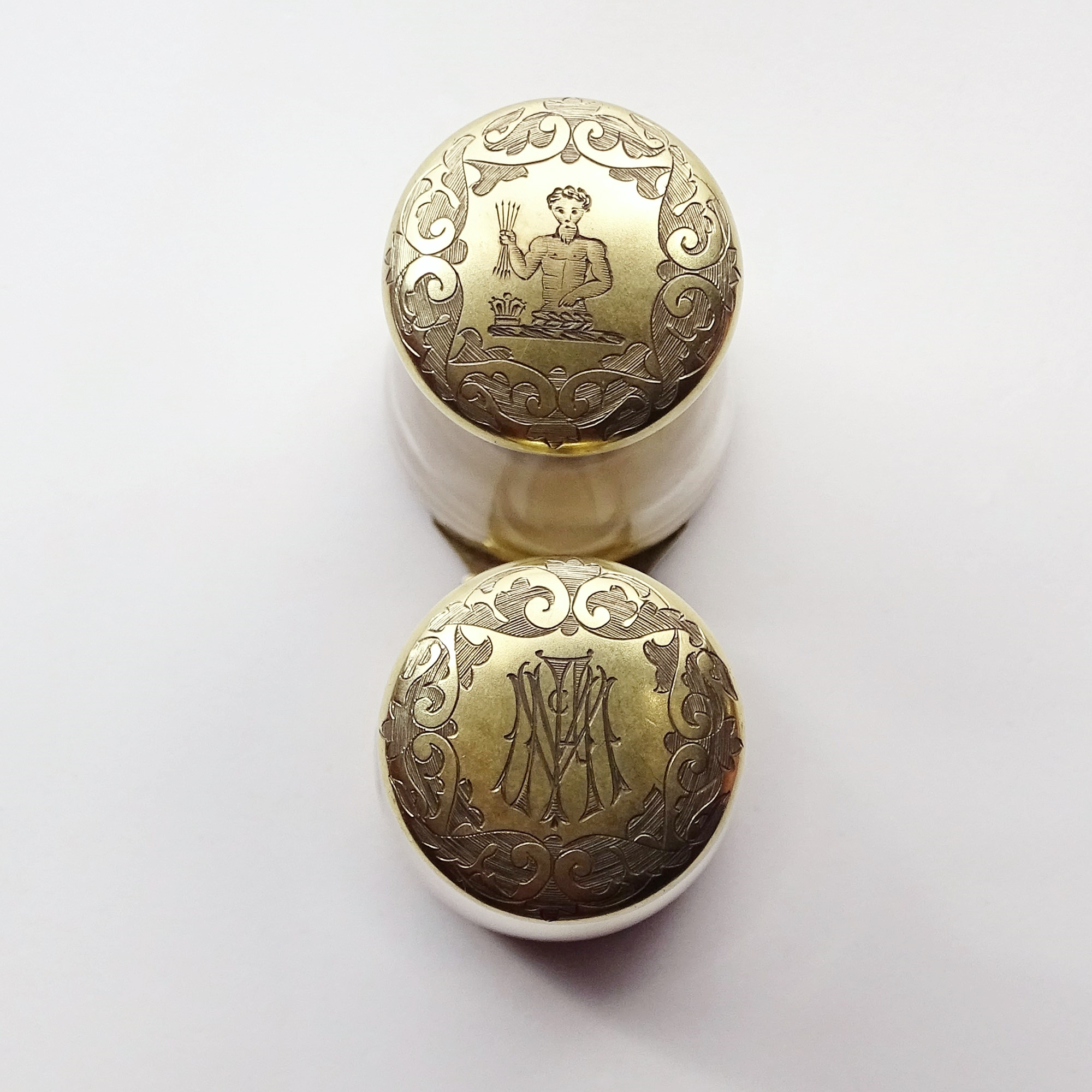
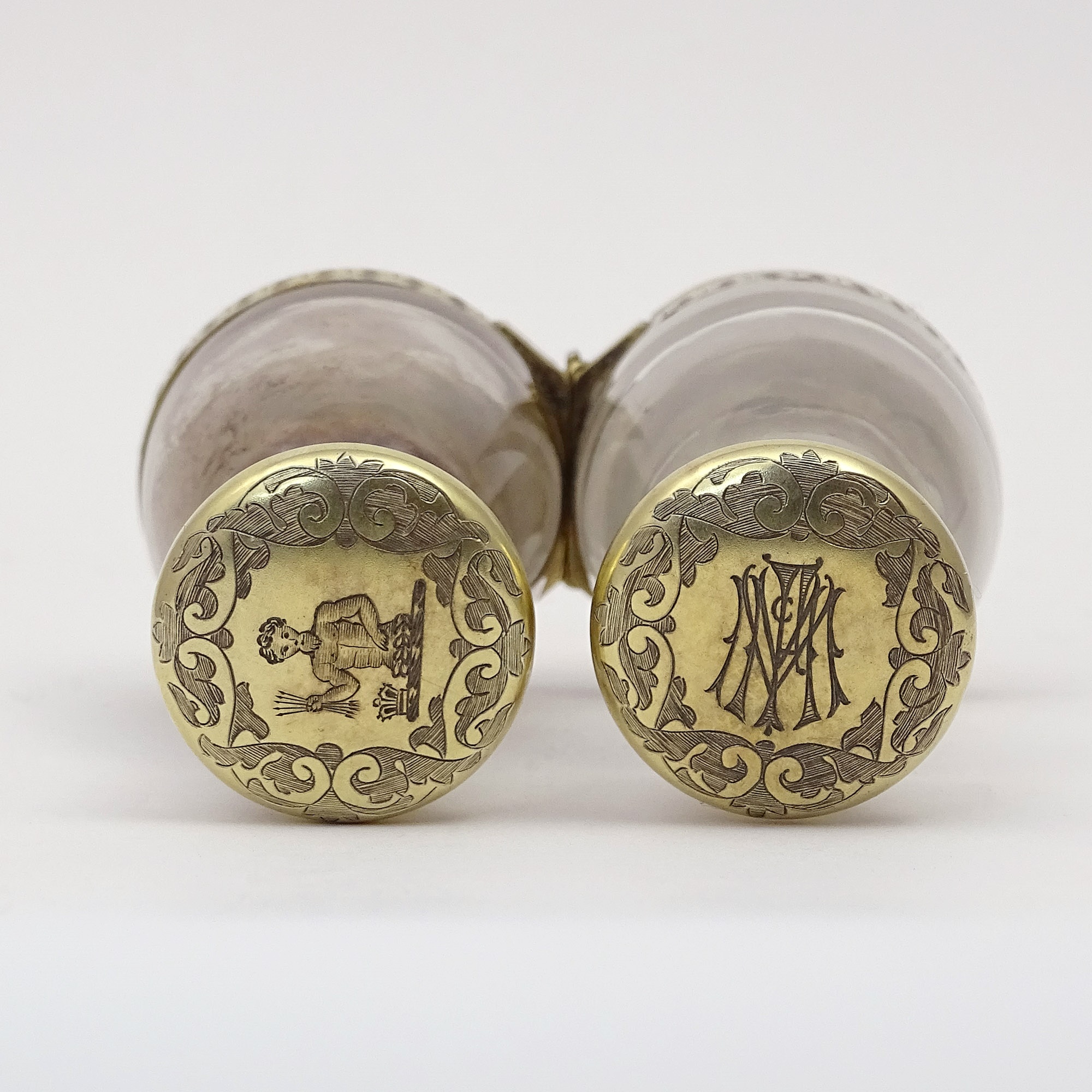
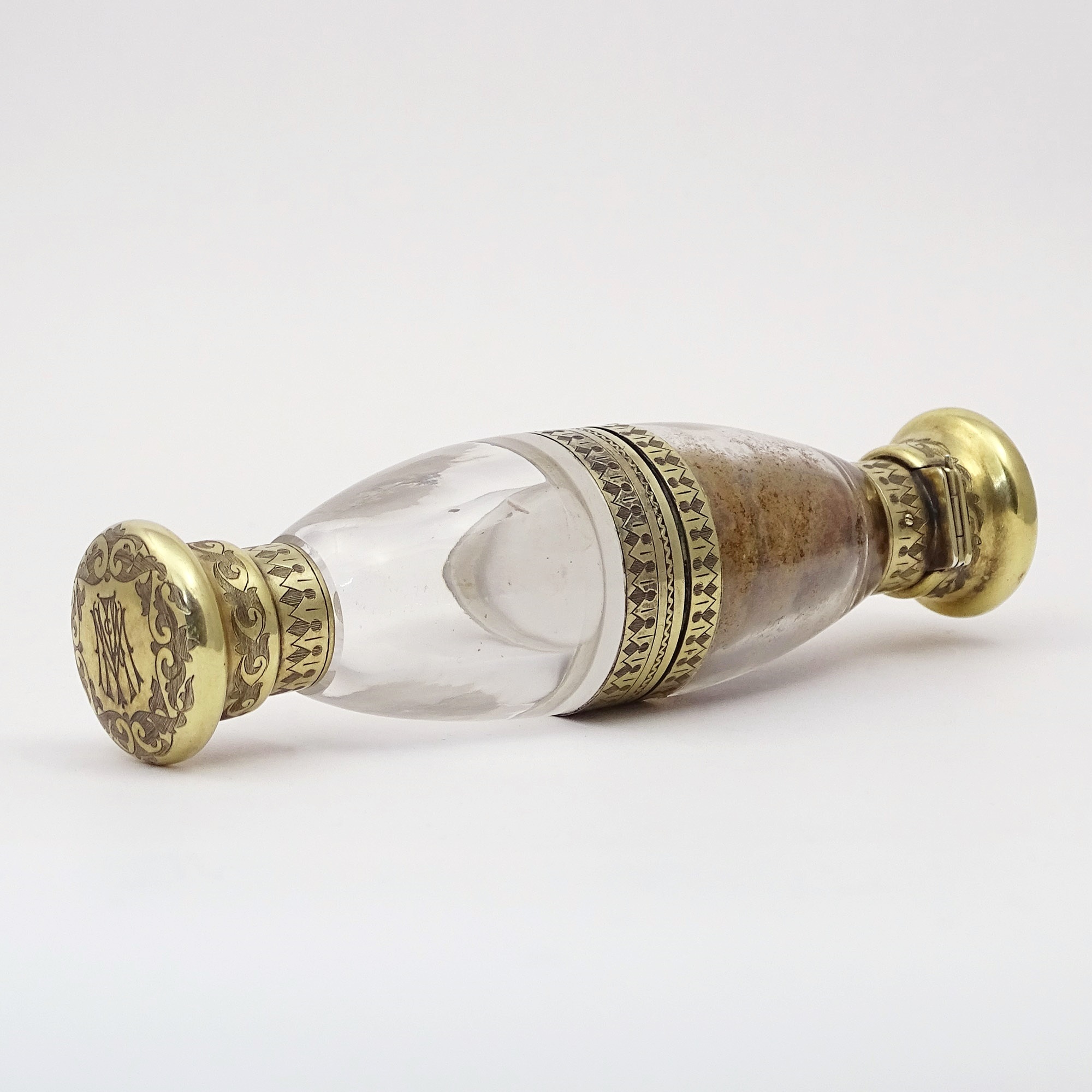
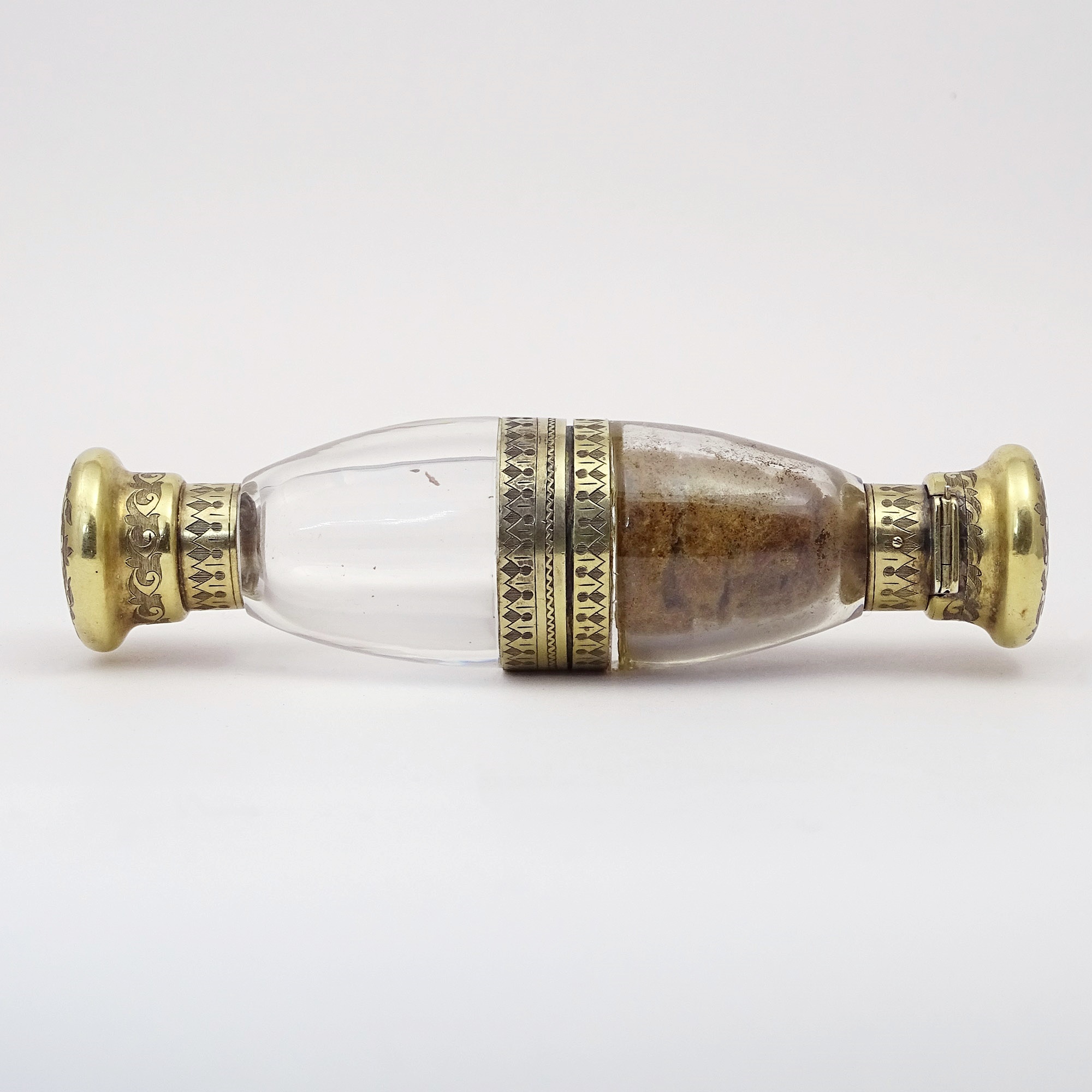
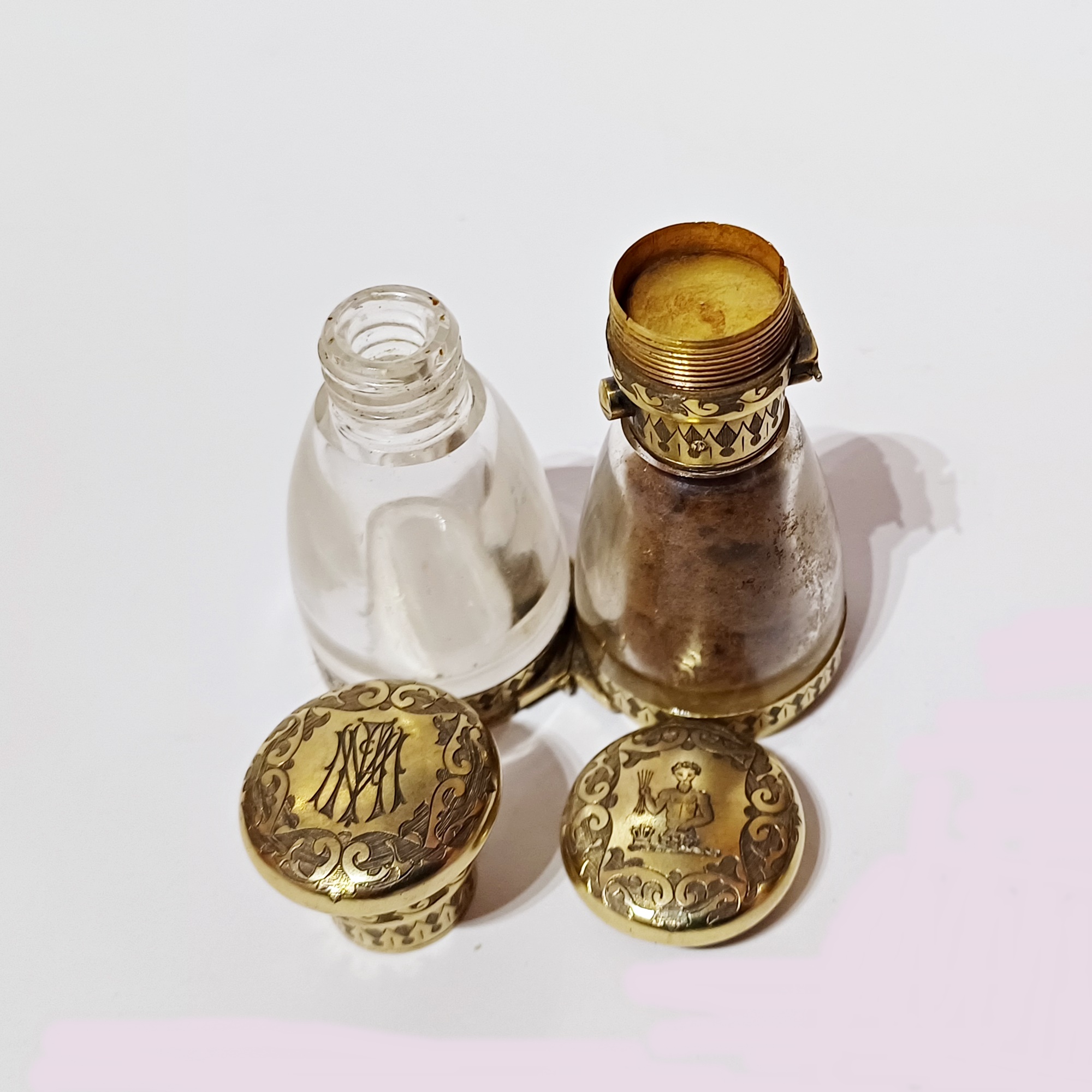
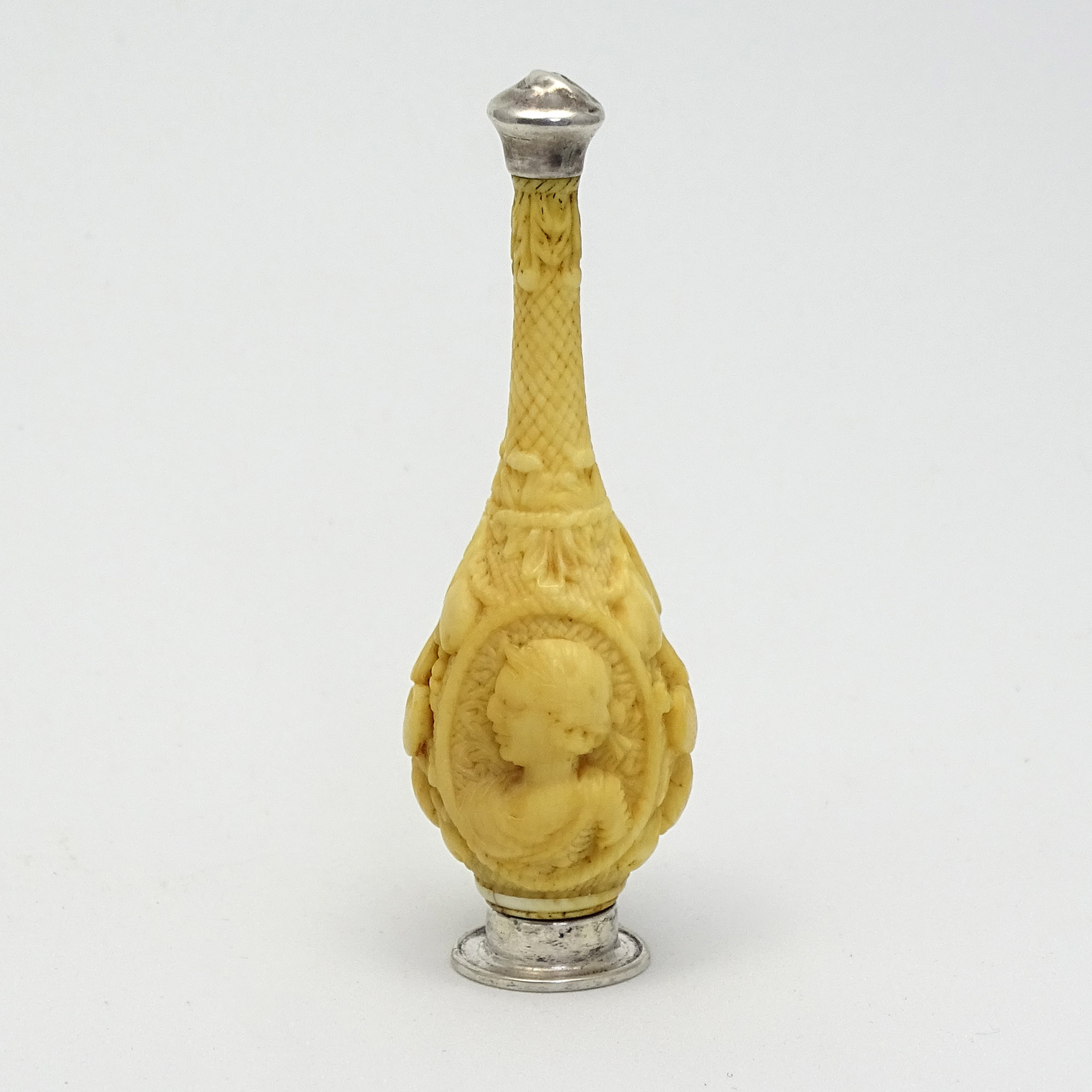
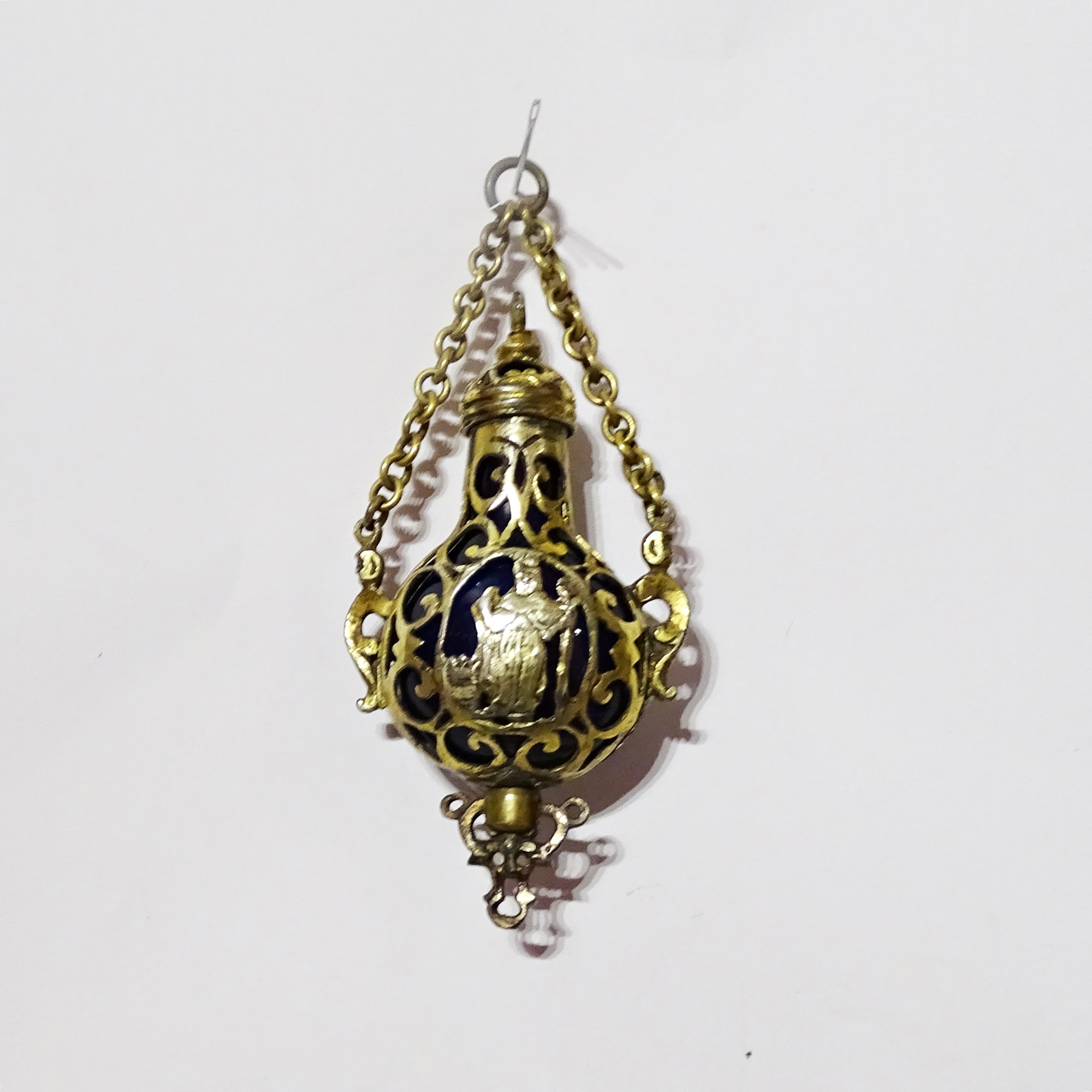
Double scent container made to fold in the center to take the aspect of an opera glass. The mounting is solid gold, except for an area in the center that appears to be heavy silver gilt; the metal is hand-tooled with an emblem engraveding the top depicting Juppiter nestled on a bed of ermine with and crown. The bottle with the snap closure is still filled with brown cotton-wool and salts; the original case of brown sharkskin is lined in purple silk and velvet bearing the legend in gold “D.C. Rait & Sons, Goldsmiths to the Queen”.
D. C. Rait & Sons were a respected jewellery firm who operated in Glasgow in one form or another from the 1820s until well into the twentieth century. In 1869, the firm was listed as ‘Goldsmiths to the Queen, Jewellers, Watchmakers and Silversmiths’, and operated from a fancy showroom at 34 Buchanan Street on Glasgow’s main shopping promenade. The goods inside the shop were of such high value that the owners reputedly had the walls and roof lined with iron plates. In March 1869 The Inverness Courier reported that Rait & Sons had ‘been active purchasers of Sutherland gold from the commencement of the discovery, and have assayed several specimens officially’.
Period
Victorian
Scotland, 1860
glass and silver or vermeil or gold
6,5 cm
COD.
720
See: Sloan J. “Perfume and Scent Bottle Collecting”, Wallace-Homestead Book Company, 1989, pag 24, fig 3-15 and pag 173 It noted that ‘these have ranged from 19 to 19¾ carats. Mr Robert Gilchrist, the original discoverer, seems to have been very