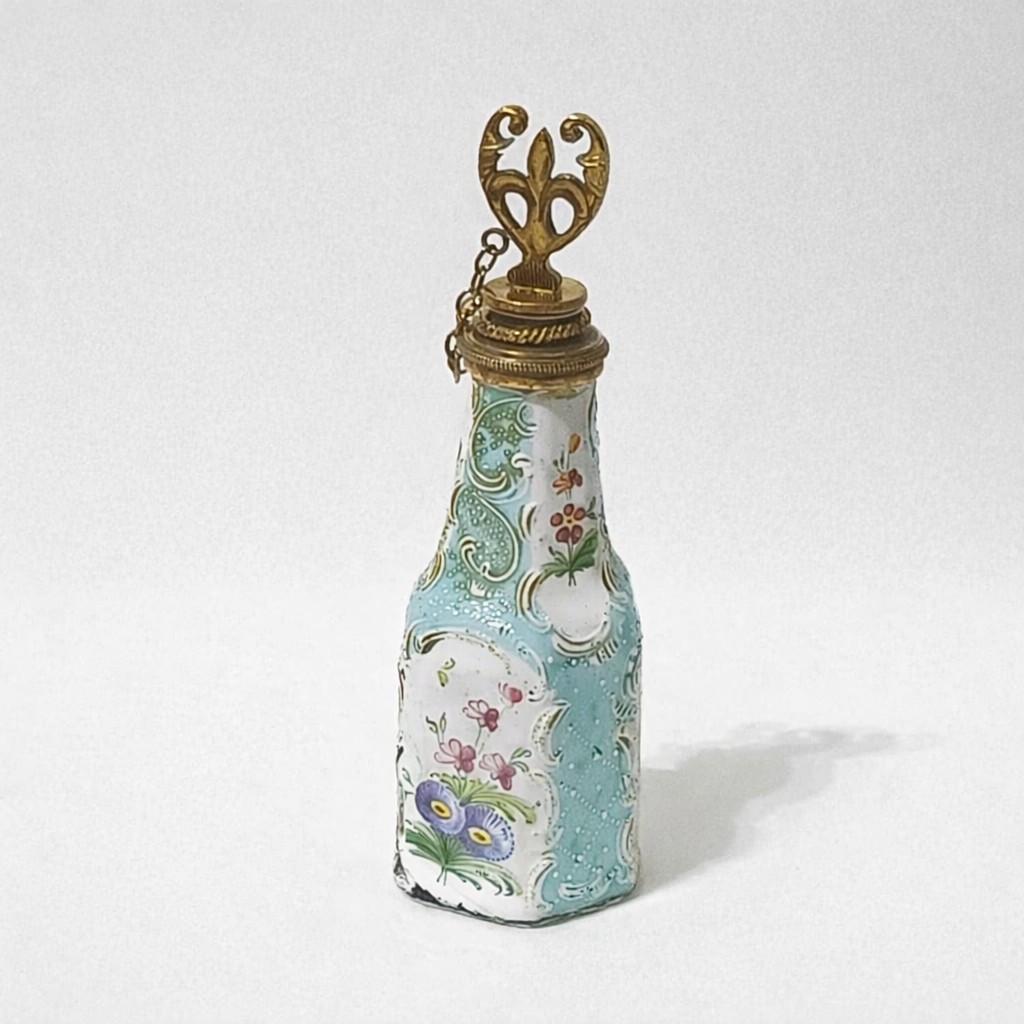
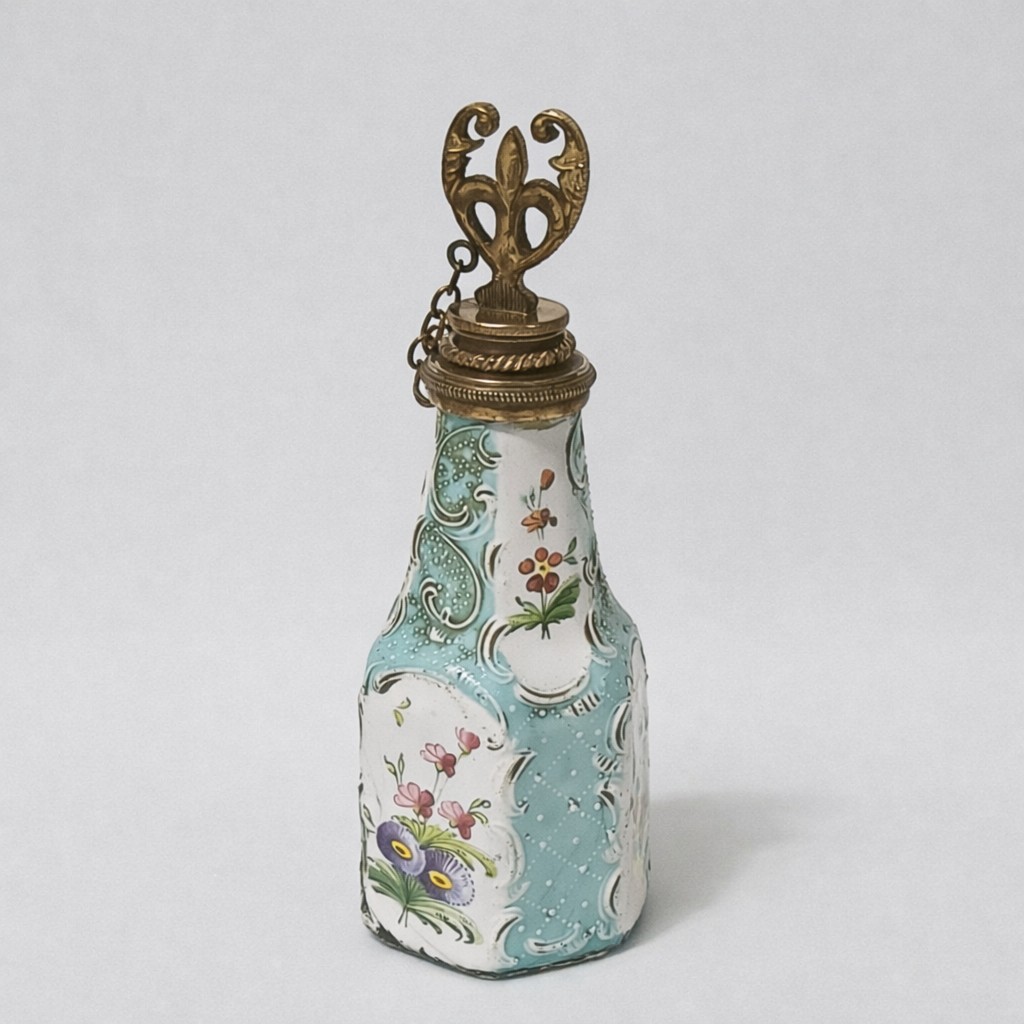
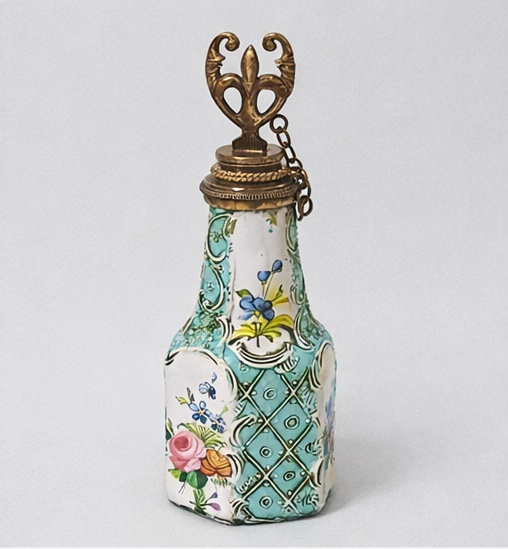
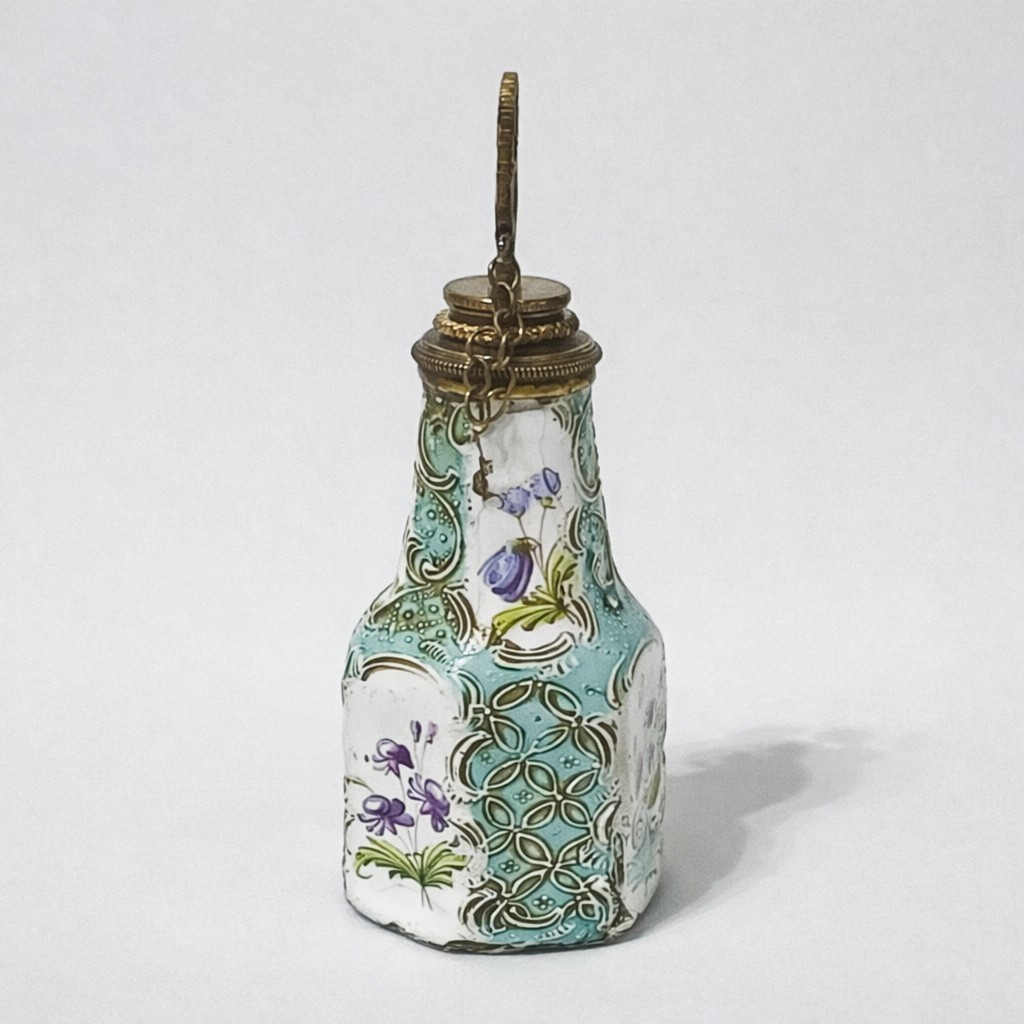
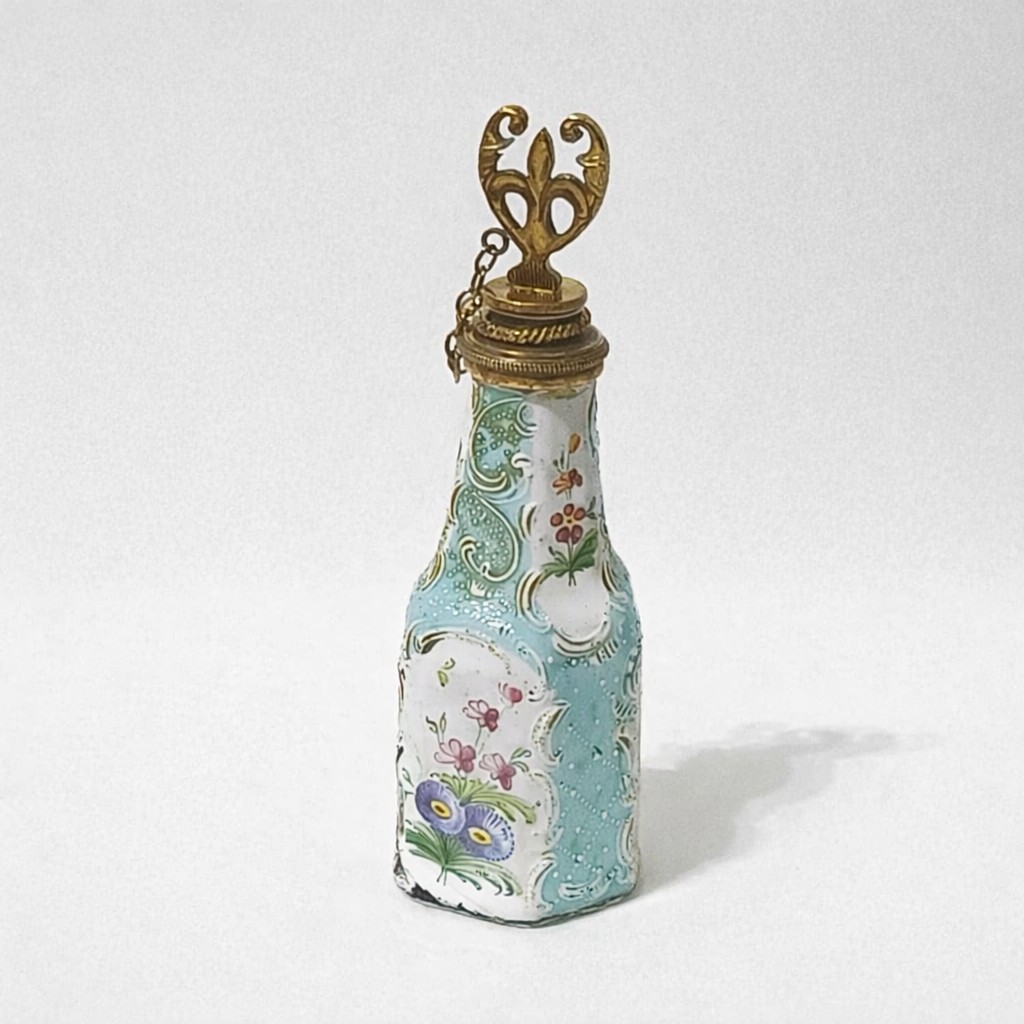
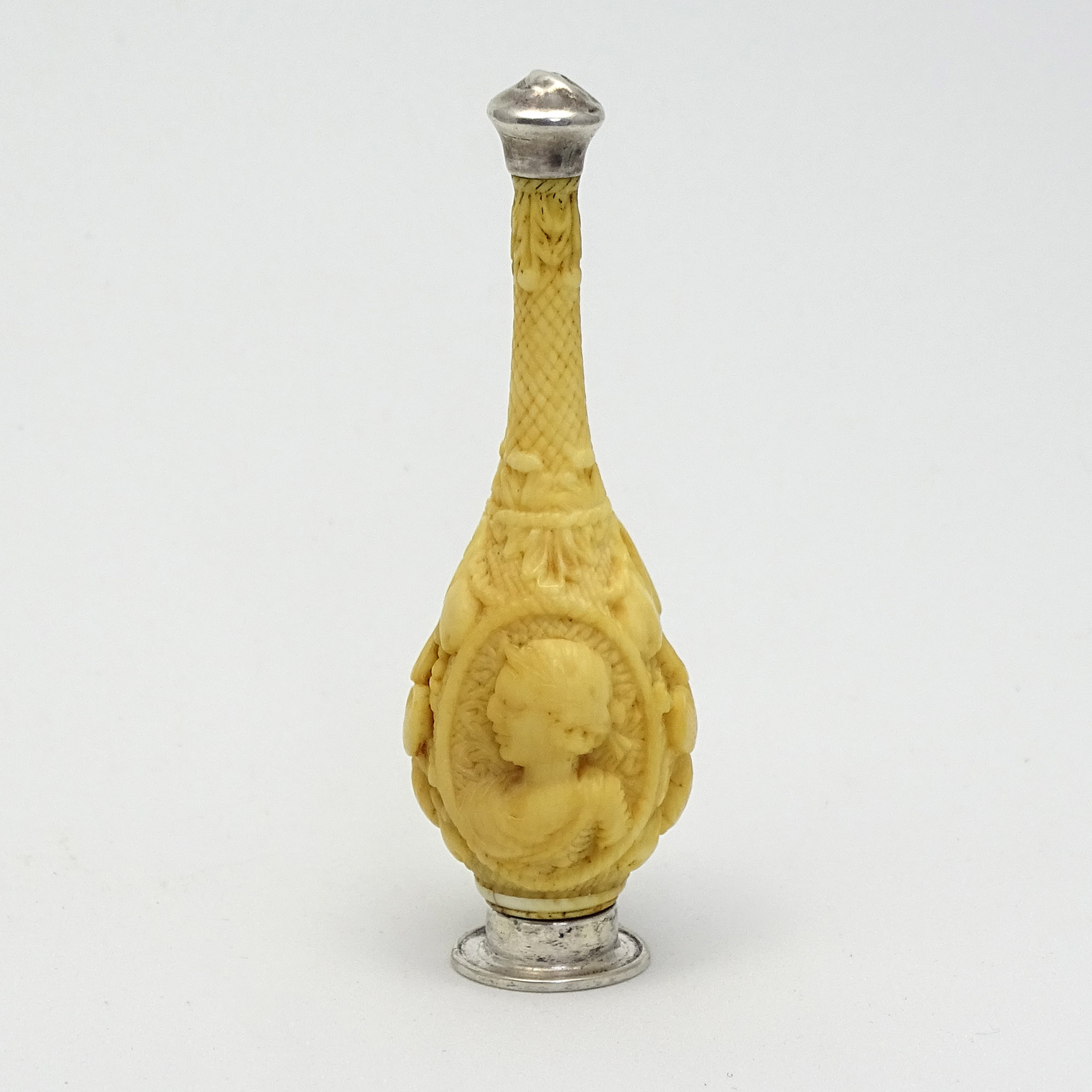
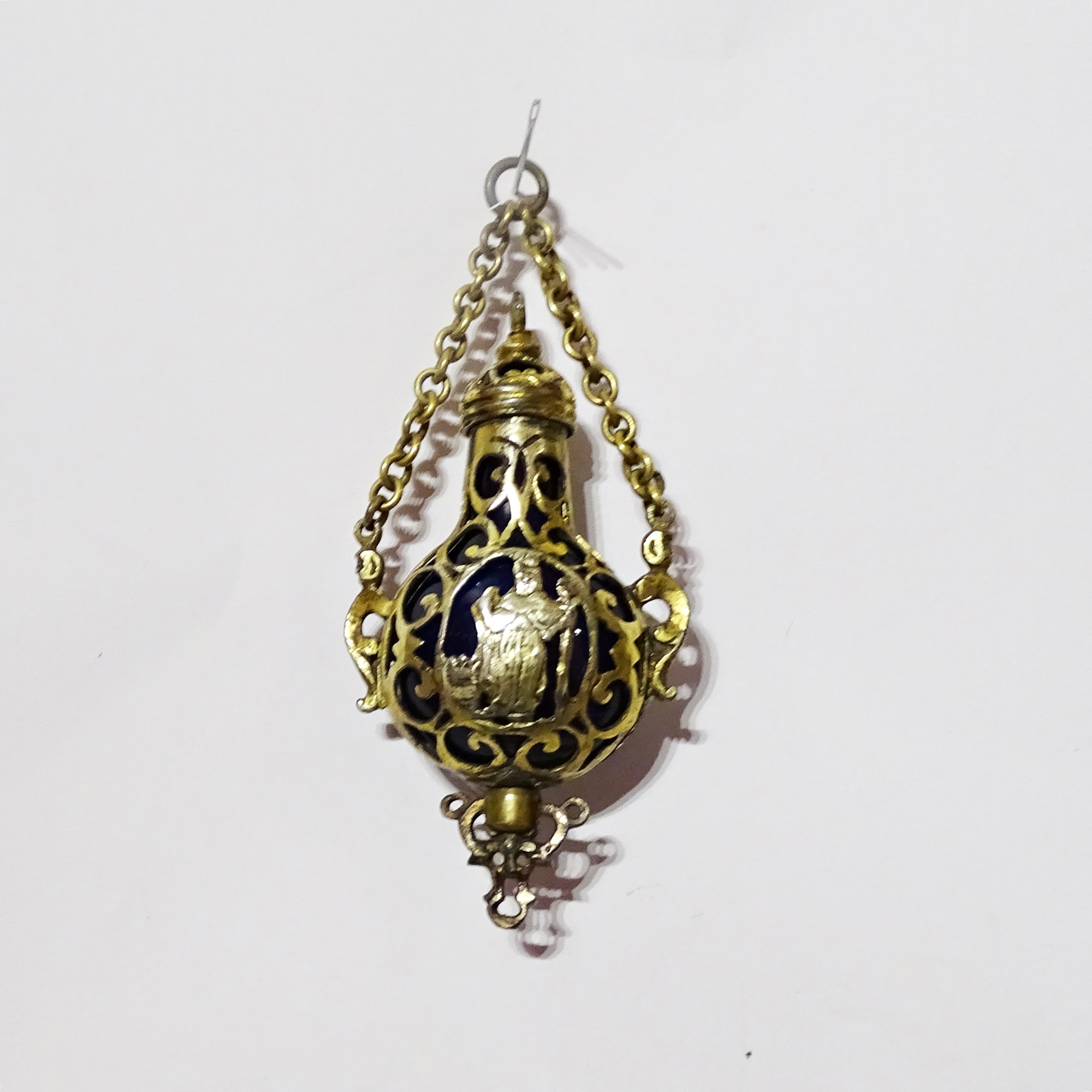
Bilston scent bottle, produced primarily in South Staffordshire (particularly Bilston and Wednesbury), an area renowned at the time for its metalwork and copper enamels.
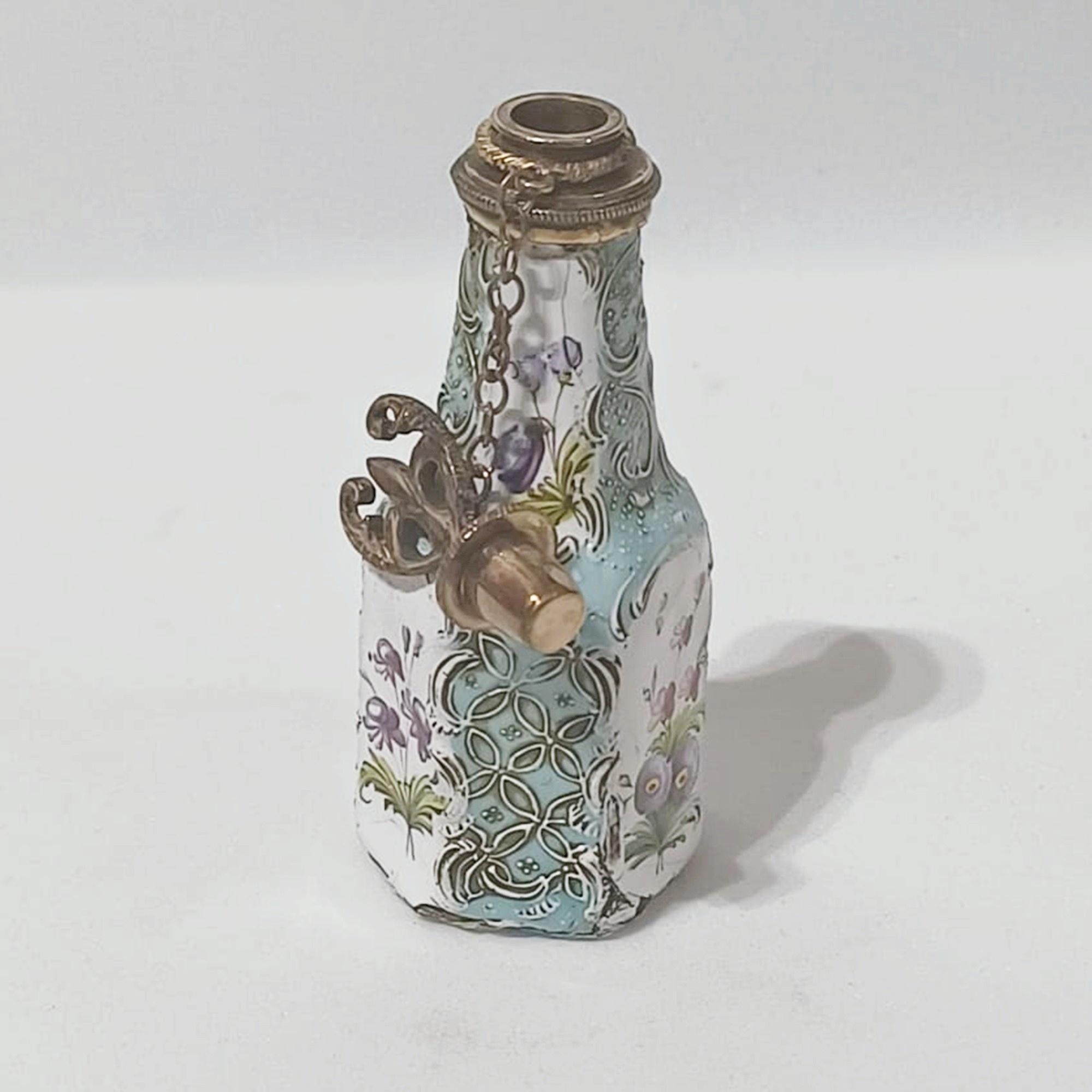
The exagonal body is crafted from a thin sheet of shaped copper, then coated with a layer of opaque vitreous enamel and fired at very high temperatures. Details like flowers and bouquers were then added by hand by decorators. It features the classic Bilston-style decorations. These include white-background cartouches decorated with delicate, hand-painted bouquets of polychrome flowers (roses and violets). The surrounding background is a characteristic pale blue/turquoise color (commonly called powder blue), embellished with small white dotted reliefs (raised white enamel or dotting) and decorative scrolls.
Frame: The upper part features its mouthpiece and the original cap in worked gilded metal (often brass or mercury-gilded copper), surmounted by a decorative lily or scroll motif, completed by a small chain that secures the cap to the bottle.
Period
18th century
England, 1780 ca
Enamelled metal
8.5 cm
COD.
1275