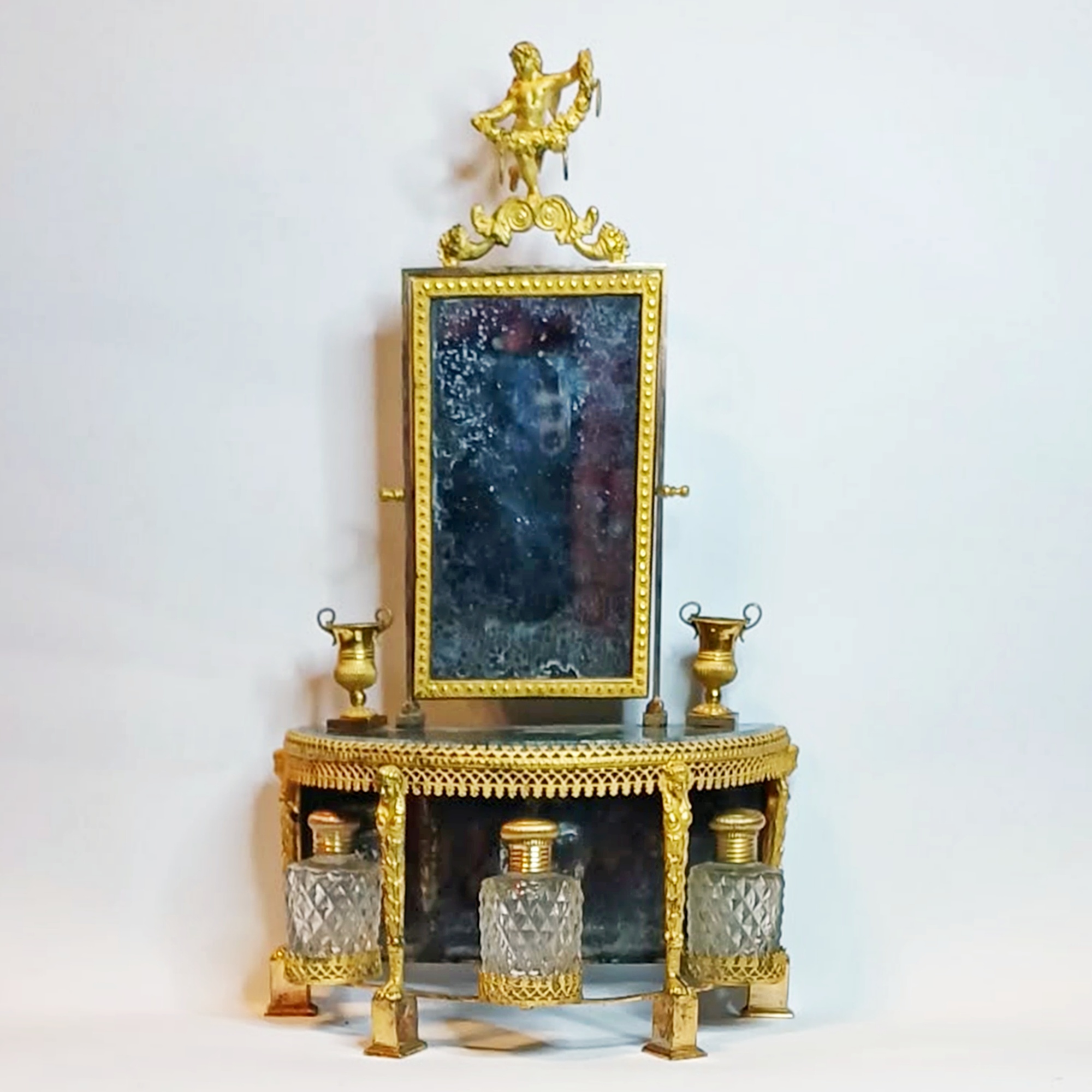
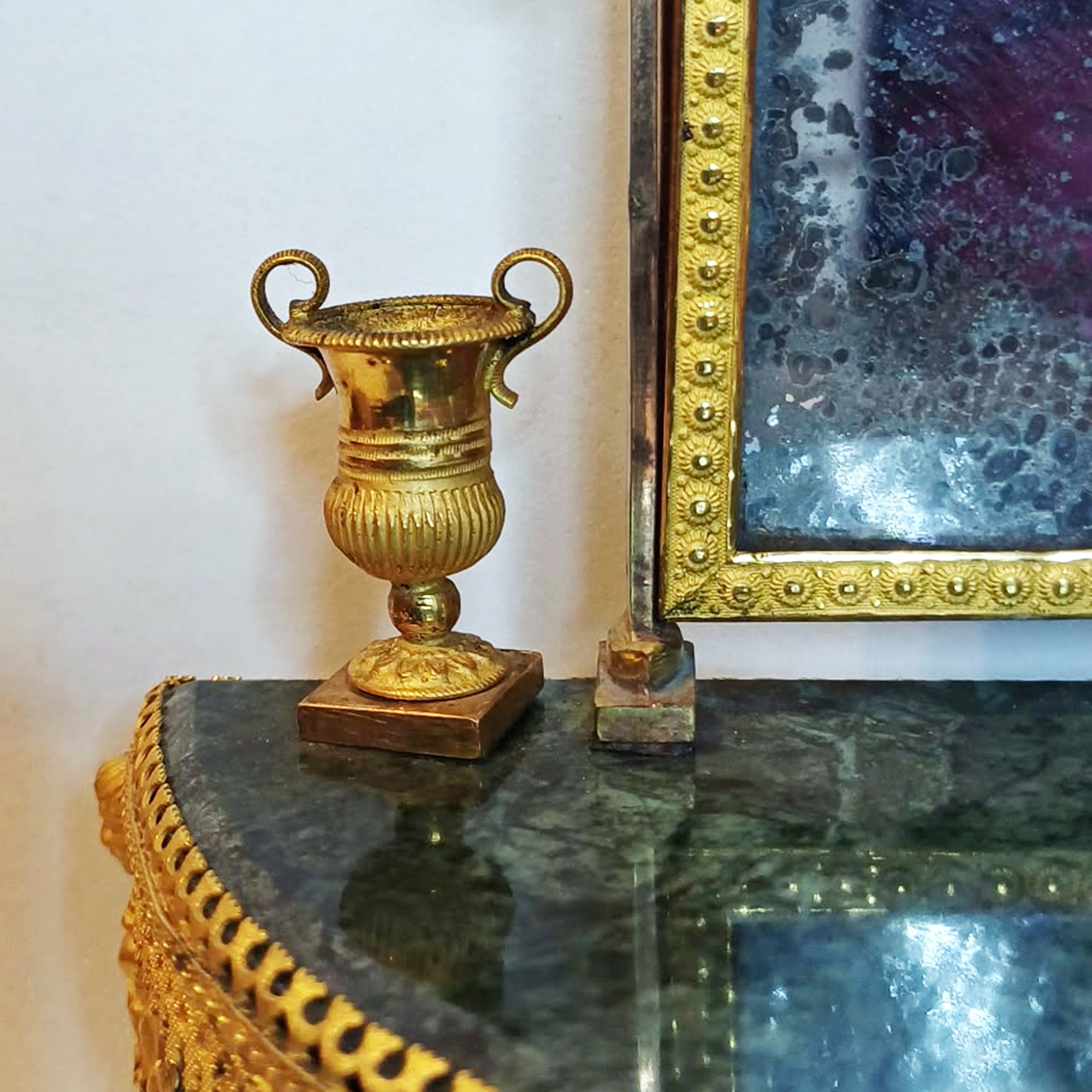
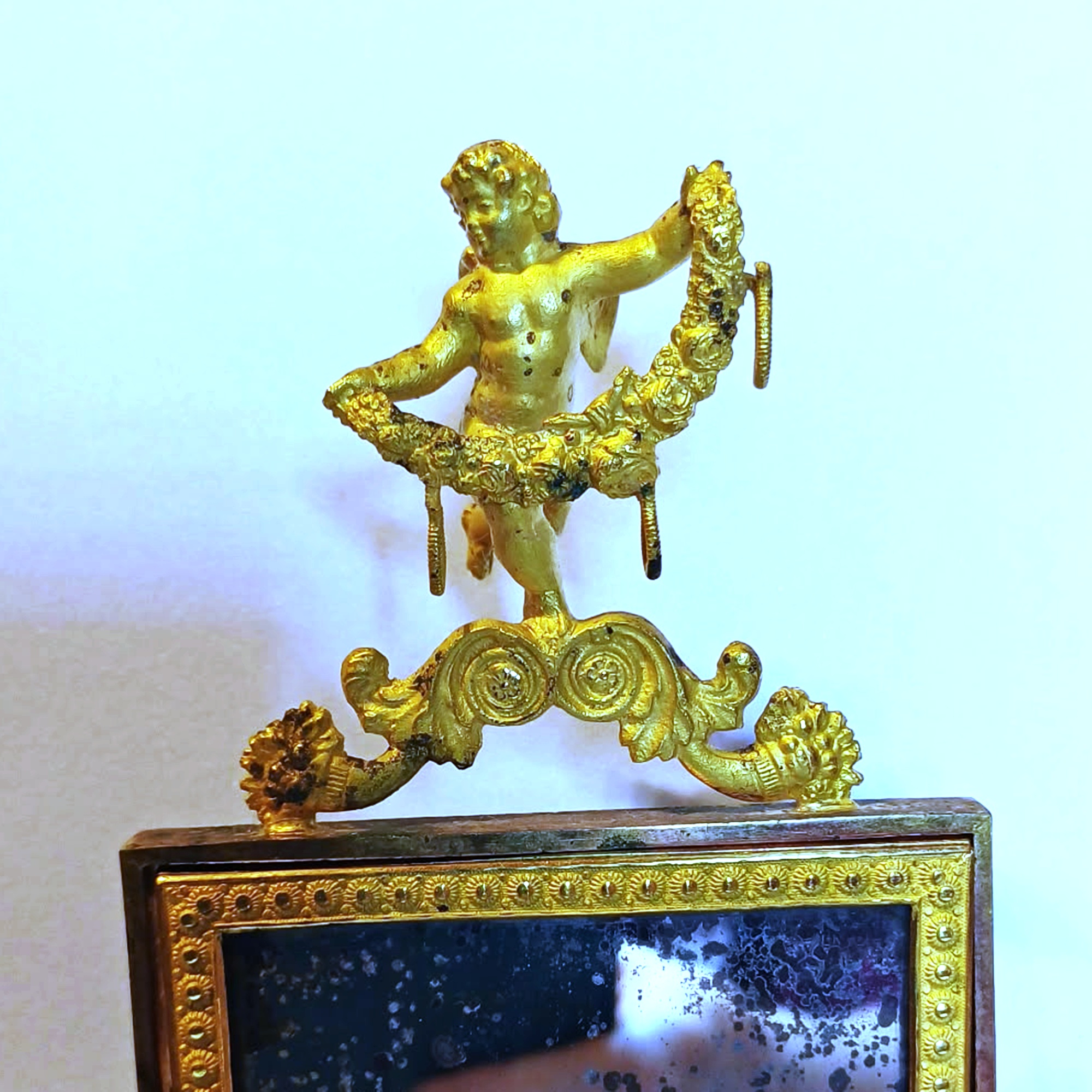
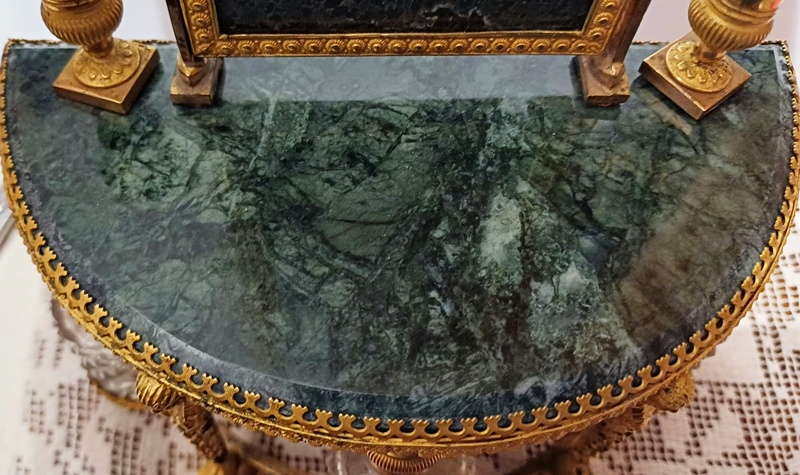
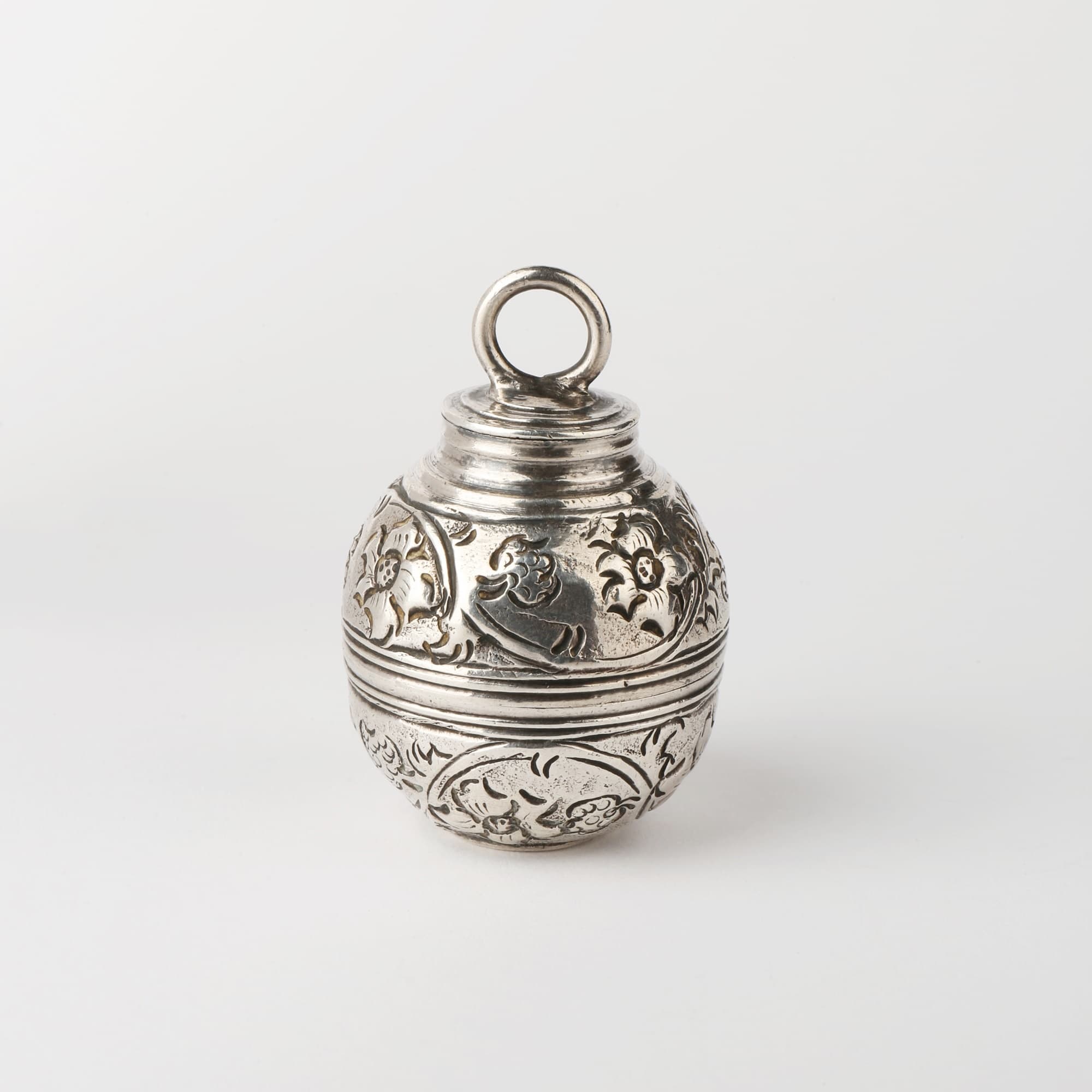
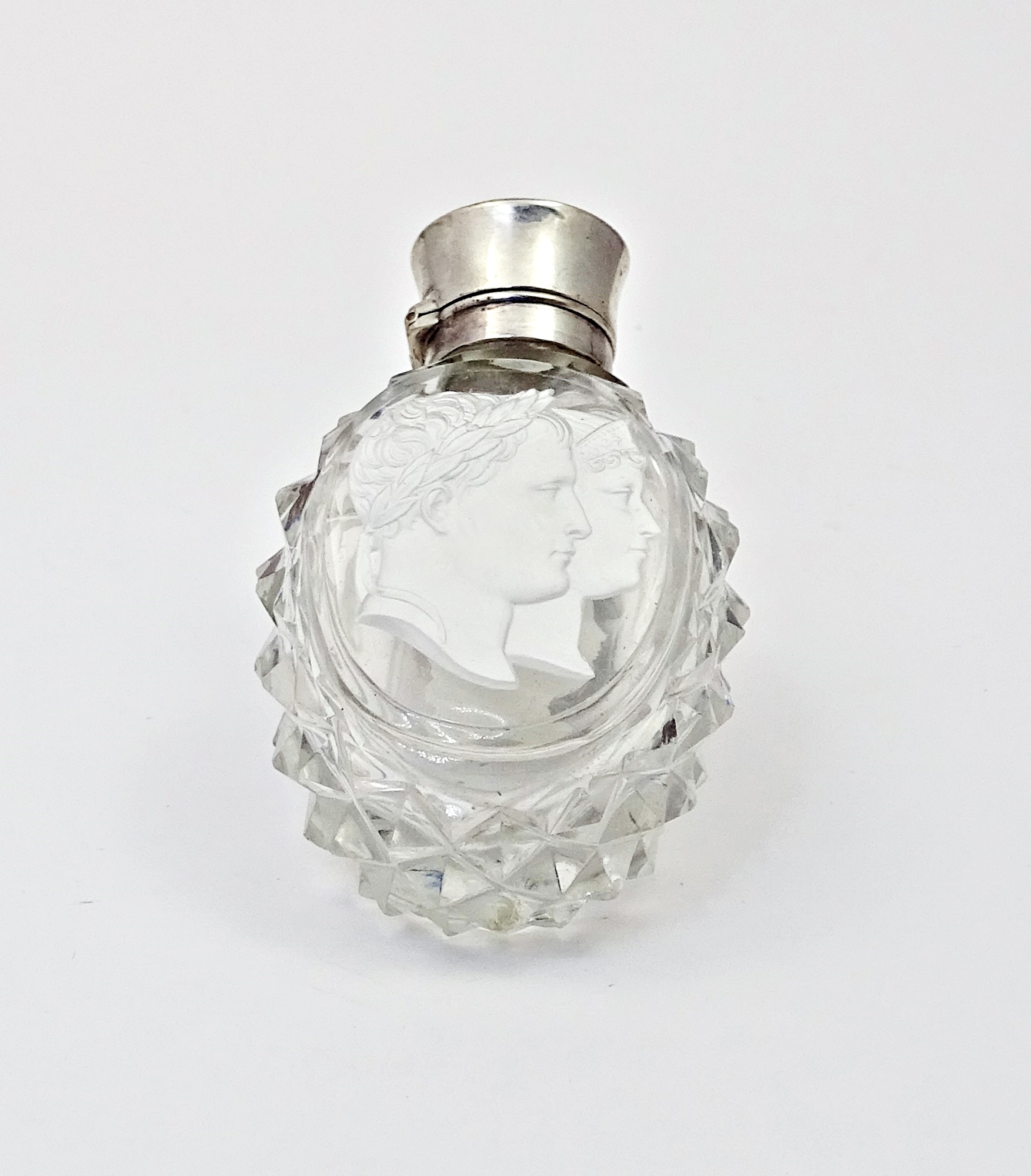
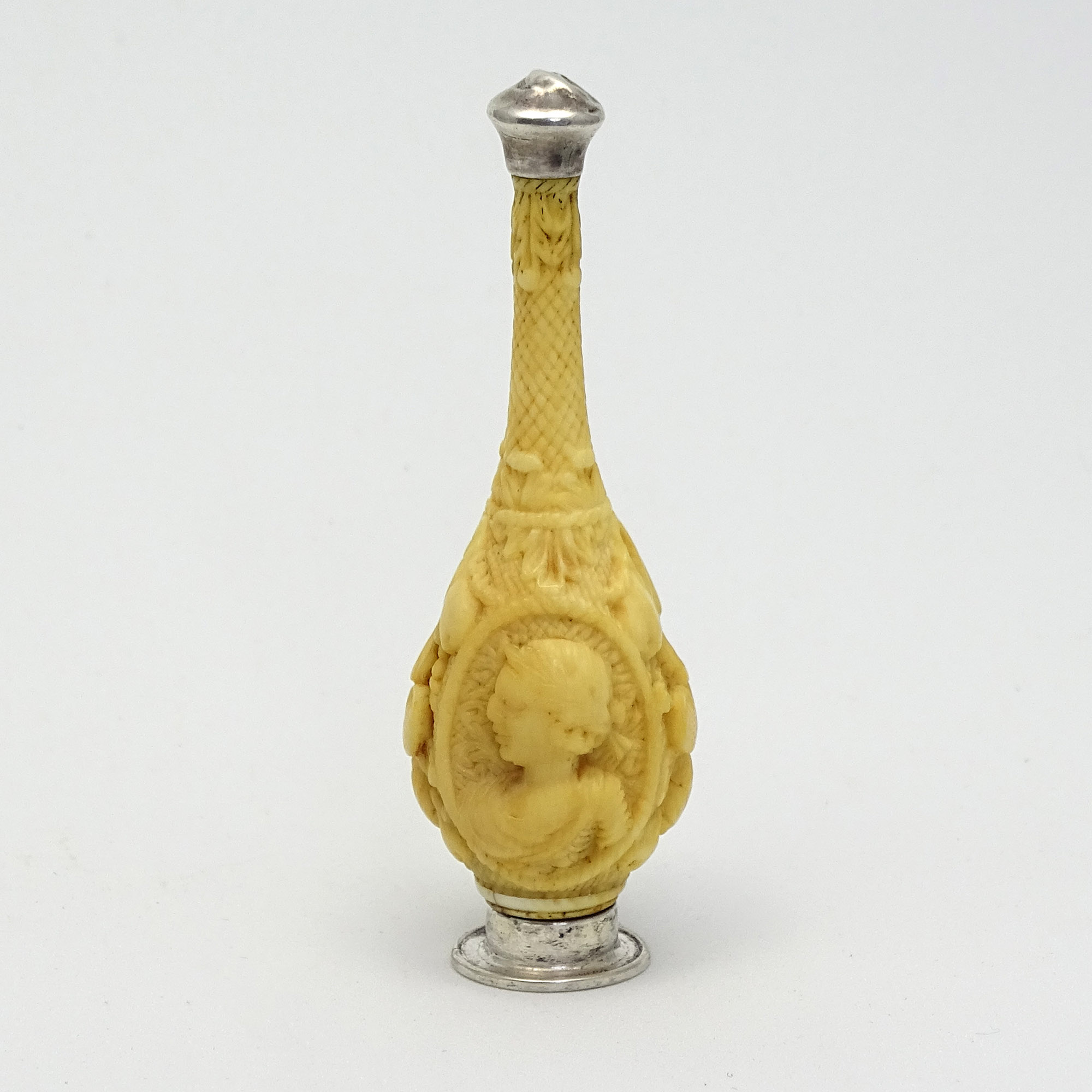
Palais Royal perfume vanity set, finely crafted from gilt bronze (ormolu), marble and crystal, featuring an exquisite French Neoclassical style console. Rising above the main shelf is a rectangular tilting mirror (*psyché*), framed by beadwork and topped with a refined crest featuring scrolling foliage and a three-dimensional gilt figure of a winged *putto* (cherub), holding a garland of flowers. Two small, matching bronze vases flank the mirror.
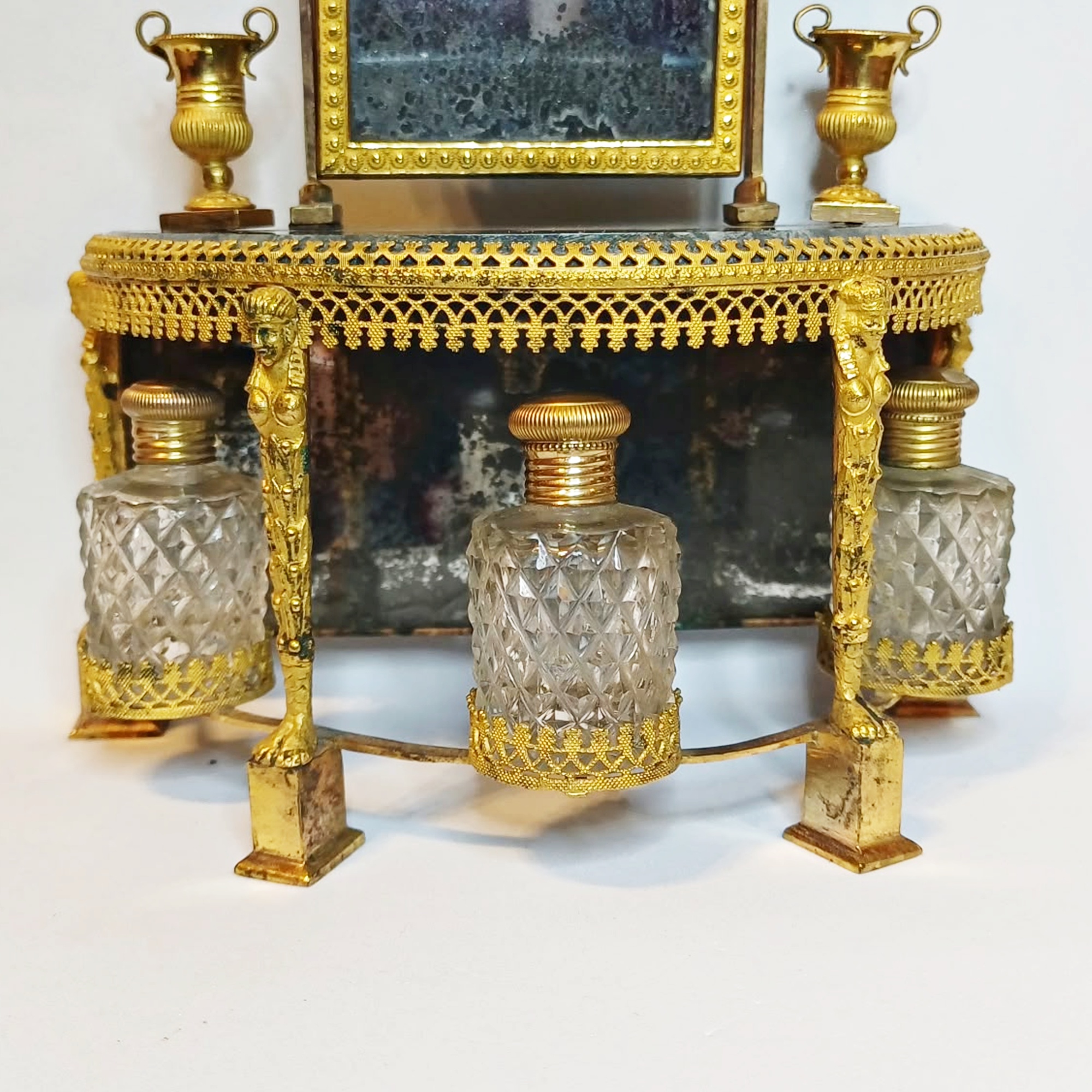
The lower section serves as a holder for three matching scent bottles, crafted from clear diamond-cut crystal and topped with decorative gilt-bronze caps and inner glass stoppers. The entire console rests on four elegant, square-section feet with molded detailing showing female figures integrated into the structure’s front uprights. These caryatids—specifically in the form of *termini* (or terminal pillars)—modeled with the exquisite Empire and Renaissance Revival taste are characteristic of the Napoleon III period.
Their specific iconographic and aesthetic configuration is distinguished by the following details:
• “Terminus” Morphology: The figure features a head and bare torso with classical features (often crowned with a garland or with hair worn up), which transition downward to merge into a geometric pillar that tapers toward the base, finally ending in anthropomorphic feet resting upon a square plinth.This ornamental motif derives directly from ancient Roman art—rediscovered during the Renaissance and subsequently revived with vigor in the early decades of the 19th century (French Empire style). Around 1860, Parisian artisans adopted these stylistic elements, applying them to luxury vanity objects to imbue them with a majestic, miniature architectural solemnity.
The marble is Verde Alpi (also historically known in France as *Vert des Alpes* or *Vert d’Italie*), displaying a very intense dark green coloration, typical of serpentinite rock, and characterized by a dense, spectacular network of veins and blended brecciated areas, ranging from pale crystalline green to the grayish-white of calcite, yet lacking the large, isolated white patches typical of *Verde Antico*. Although quarried in the Western Alps (predominantly on the Italian side, particularly in the Aosta Valley), this marble was one of the most cherished and widely used imported materials among Parisian artisans during the reign of Napoleon III. Its compact structure and ability to take a mirror-like polish made it perfect for small console tops, vanity boxes, and bases for high-quality gilt-bronze pieces, as its deep forest green maximized the brilliance of the ormolu.
Period
Late 19th century
France, 1860 ca
Glass, metal and stone
5 cm s.b.
COD.
1339