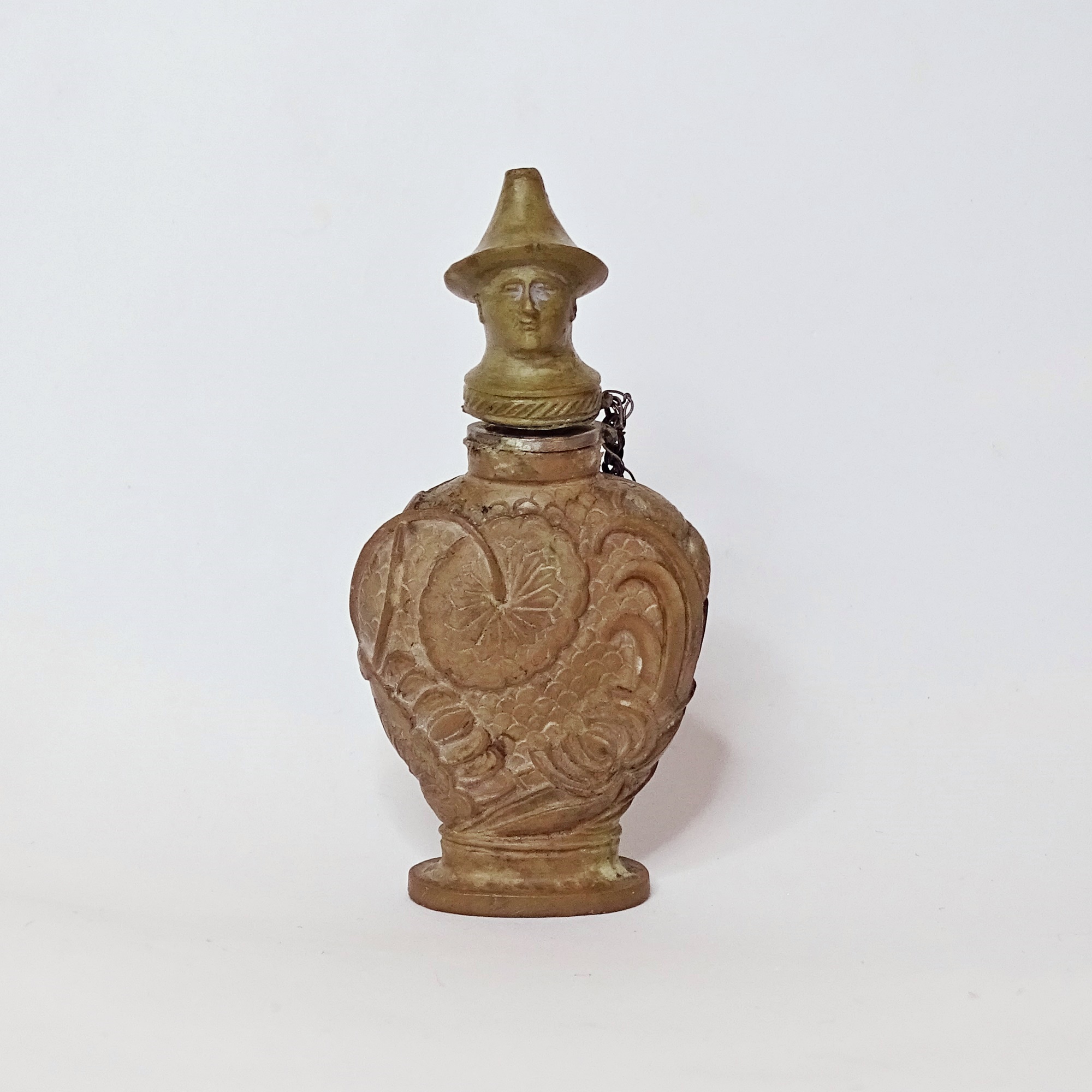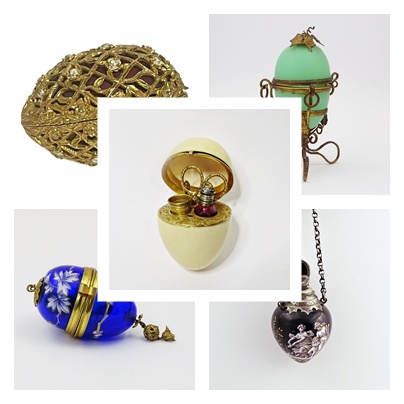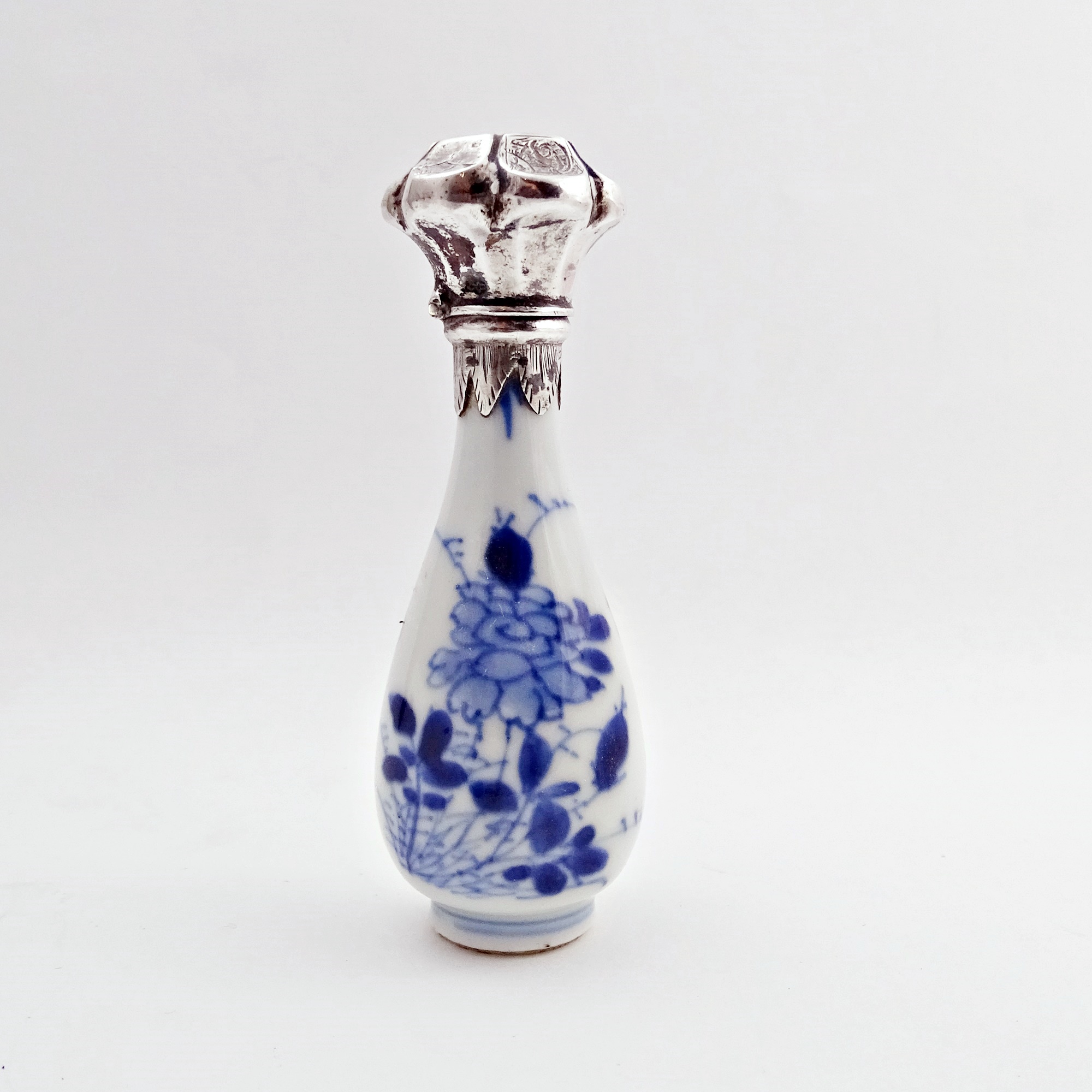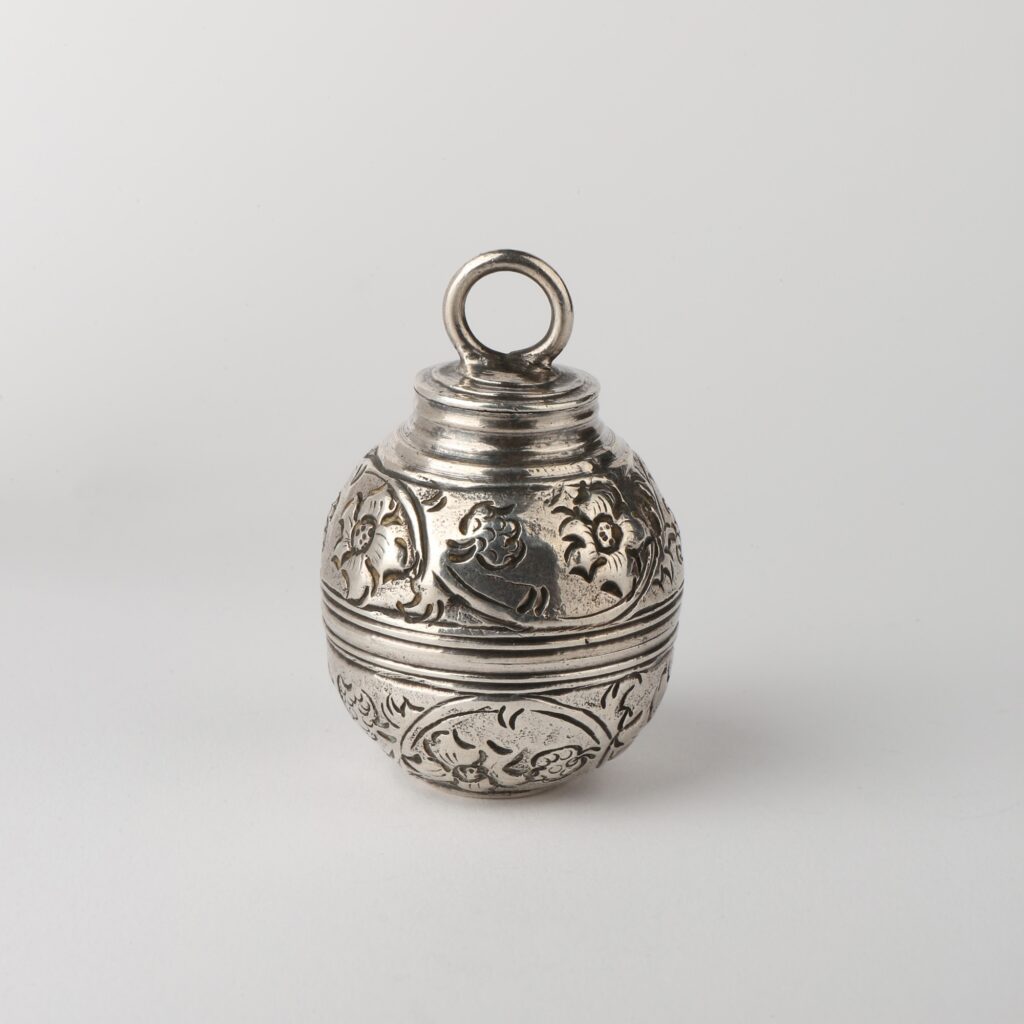
Like Scrooge McDuck, I also have my number one, that is, the sketch bottle that gave a boost to my collection and defined its criteria. It was in the university years, spent in Parma, that the collection began to define itself, taking up its present structure. It all began with the discovery of a unique store selling a miscellany of antique objects and “toiletries”: Miss Carlotta seemed to live still at the time of the objects she was selling. She ran her shop more with the attitude of a collector than that of a merchant: entering that shop, with the showcases in faded turquoise wood, was like entering another era. It was the purchase of a small egg-shaped silver object, according to her coming from a noble Venetian family, which set the parameters characterizing the over one thousand scent bottles of my current collection. What I later discovered to be a German perfume box of the 17th century bore two fundamental characteristics of my present collection: its being unusual and the measures, always less than 9 centimetres.
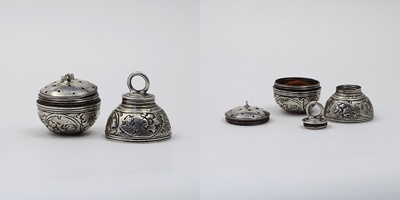
This silver perfume box is still one of the oldest and most important pieces: I soon discovered that it was composed of four parts (not three as I had been told) and has two distinct compartments. The larger one is obviously for the perfume: imagine something oily and dense, semi-solid, and very balsamic. It could be sniffed as needed (as was done with tobacco), and indeed the inner lid is perforated. It was useful for protecting the wearer of the bottle, which hung on a chain, from miasmas and evil fumes, carriers of terrible diseases that, as was already believed in the 17th century, traveled through the air. Naturally, only rich and noble people could afford such objects, which therefore must have been beautiful and precious, both in terms of materials and workmanship.
To my amazement, in addition to the perfume container, there is another tiny compartment, just under the suspension ring, which bears very light traces of dust—alas, too few to be analyzed! Medicine, poison, aphrodisiac powder? Here, imagination can run wild: no one will ever tell us the truth.
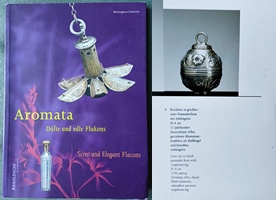
As a final discovery, years later, in the book Meninghaus-Habrch AROMATA, ARNOLDSCHE Art Publishers 1998, on page 55, figure 9, I found an object exactly identical to mine, which appears to be held at the Deutsche Medizinhistorische Museum in Ingolstadt (DE). The book describes it as “Scent-jarin closed pomander form with suspension ring. H. 4 cm, 17th century, Germany, silver, chased, floral ornaments, semisphere, unscrews, suspension lug.” A great way to start a collection!