The origins of porcelain can be traced in China during the Tang Dynasty (618–907 AD), with further refinements in production techniques during the Song Dynasty (960–1279 AD). Chinese porcelain began arriving in Europe in the 16th century, primarily through Portuguese and Dutch traders: this refined, pure white, translucent pottery was a sensation among the ruling clases. However, the long journey from east to west made it very expensive. This Asian porcelain was literally worth its weight in gold. Hence the term “white gold”. Porcelain making remained a mystery in the West until the discovery of the formula for creating high-temperature clays in 1708 by the alchemist Johann Friedrich Böttger (1682–1719) under the patronage of August II (1670–1733), Elector of Saxony and King of Poland who moved his search from gold to white gold because he had in his ownwords the “maladie de porcelaine“..
Blue and white porcelain scent bottle , product in China with Dutch silver cap.
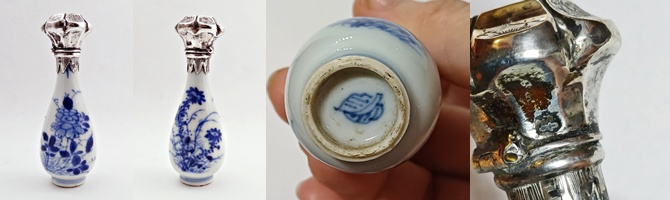
In the 18th century the blue and white porcelain scent bottles coming from China were silver mounted in the Netherlands, with characteristic big, tall cap. In particular, the town of Schoonhoven is known for its silver and therefore carries the nickname: Zilverstad (“Silver City”). Since the 17th century, silver and gold smiths have been working here. The “Artemisia leaf” or “Ai yeh” (ai ye) mark on porcelain is an underglaze blue symbol of the Kangxi period(1662-1722) of the Qing Dynasty representing the Chinese mugwort leaf. It is typically painted as a stylized leaf.
Hand-painted Chinese porcelain with an Edwardian silver cap.
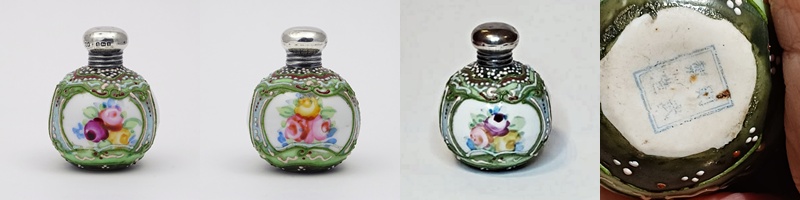
Chinese porcelain continued to be attractive to European collectors throughout the following centuries. This porcelain flask with hand-painted flowers and small raised dots was a popular design in the Edwardian period and bears a silver screw cap marked for Birmingham, 1910, RP for Robert Pringle & Sons, silversmiths.
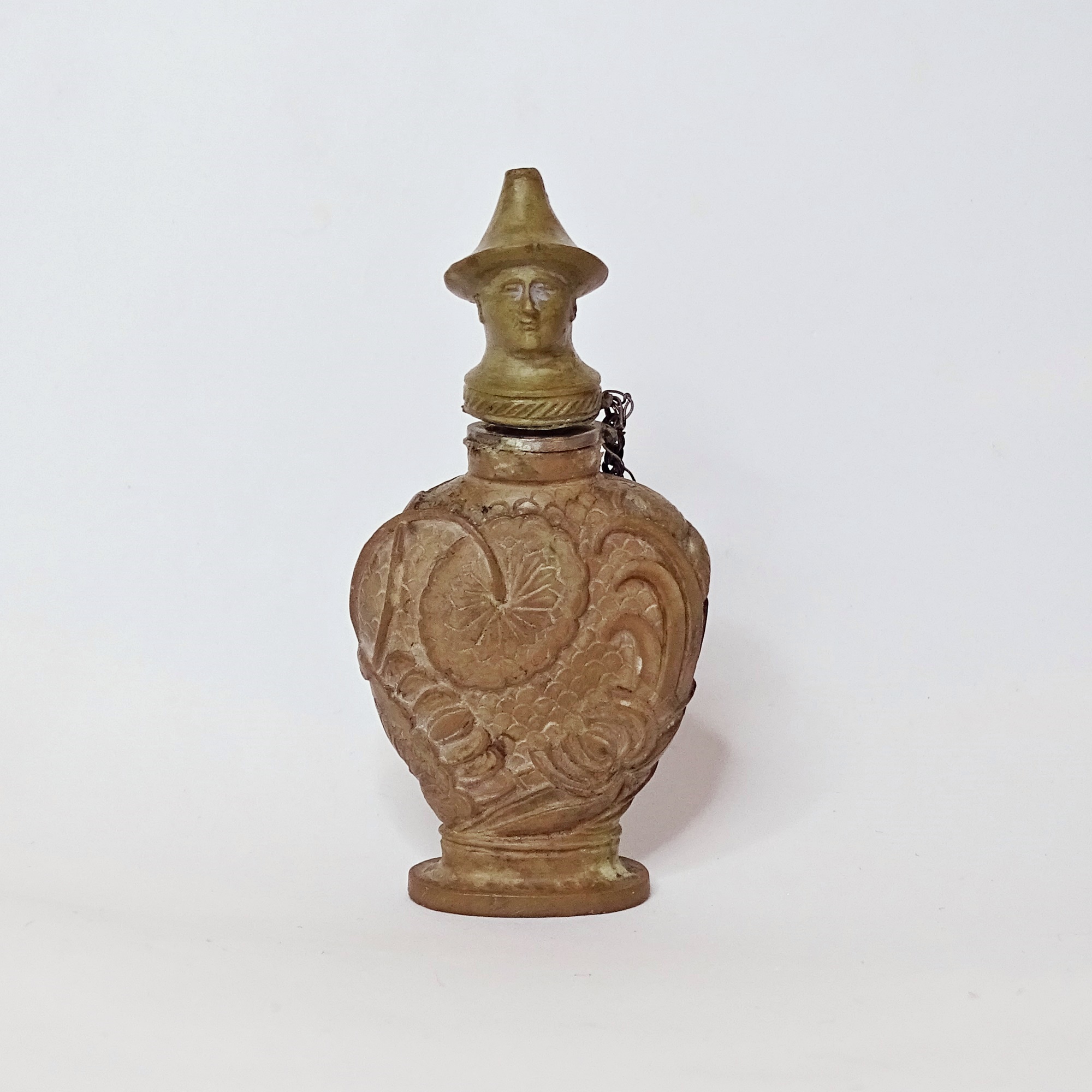
Creamware scent bottle with a relief painted decor on both sides: one with brown flowers, the other with a flying bird. These bottles were made in Japan for the foreign markets where caps where added: in this case the hinged gold cap is embossed with tiny flowers, probably made in France, giving an Art Nouveau style to the object.
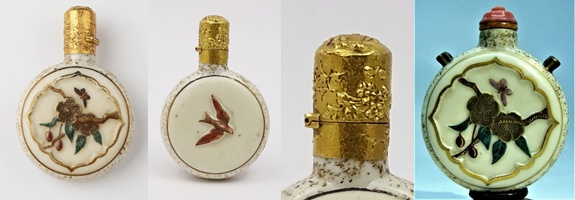
Porcelain also arrived from Japan, bringing a strong influence on design, textiles, tableware, and perfumes. Here too, perfume bottles were made for the domestic market, in a truly national style, and for export, usually without stoppers. This allowed silversmiths, who were the only ones to market them, to add their own touch. Stoppers in precious metals would enhance the value of the objects and personalize them for the customer.
The Japanese motif depicts bird and butterfly fluttering among plum blossoms. This design is commonly used in traditional Japanese festivals and celebratory decorations, such as Spring Festival or New Year ornaments. It is not only aesthetically pleasing but also embodies people’s aspirations and blessings for a beautiful life.
The history of plum blossoms in Japan dates back to the prosperous Tang Dynasty in China, when they were initially brought to Japan by envoys sent to the Tang court.
During the Nara period (710-794), plum trees first took root in Dazaifu, Kyushu, and gradually spread throughout Japan.
By the Heian period (794-1192), plum blossoms had become highly popular among the aristocratic society and were frequently featured in literary and artistic works, symbolizing nobility and resilience
This pattern frequently appears on kimonos, artworks, and everyday items as decorative motifs or symbols of good fortune.
Globular orange and cream porcelain scent bottle with floral decor. Screw cap with the word “SILVER” engraved. Bottle imported from Japan.
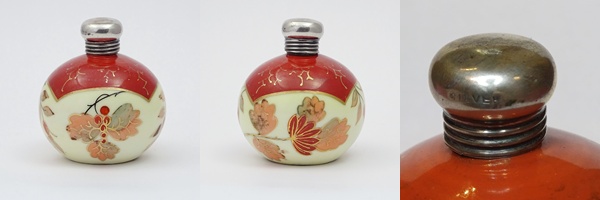
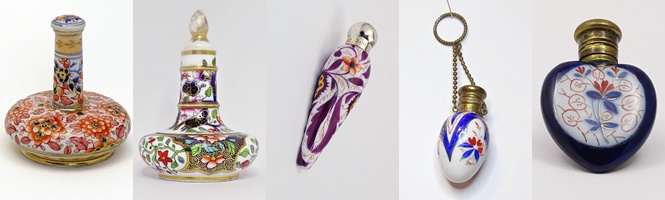
The most popular and copied Japanese style in the European scent bottles was, without any doubt, the Imari style: actually all the porcelaian scent bottles shown below are manufactured in England and show how much the Oriental style was revered in the Victorian times.