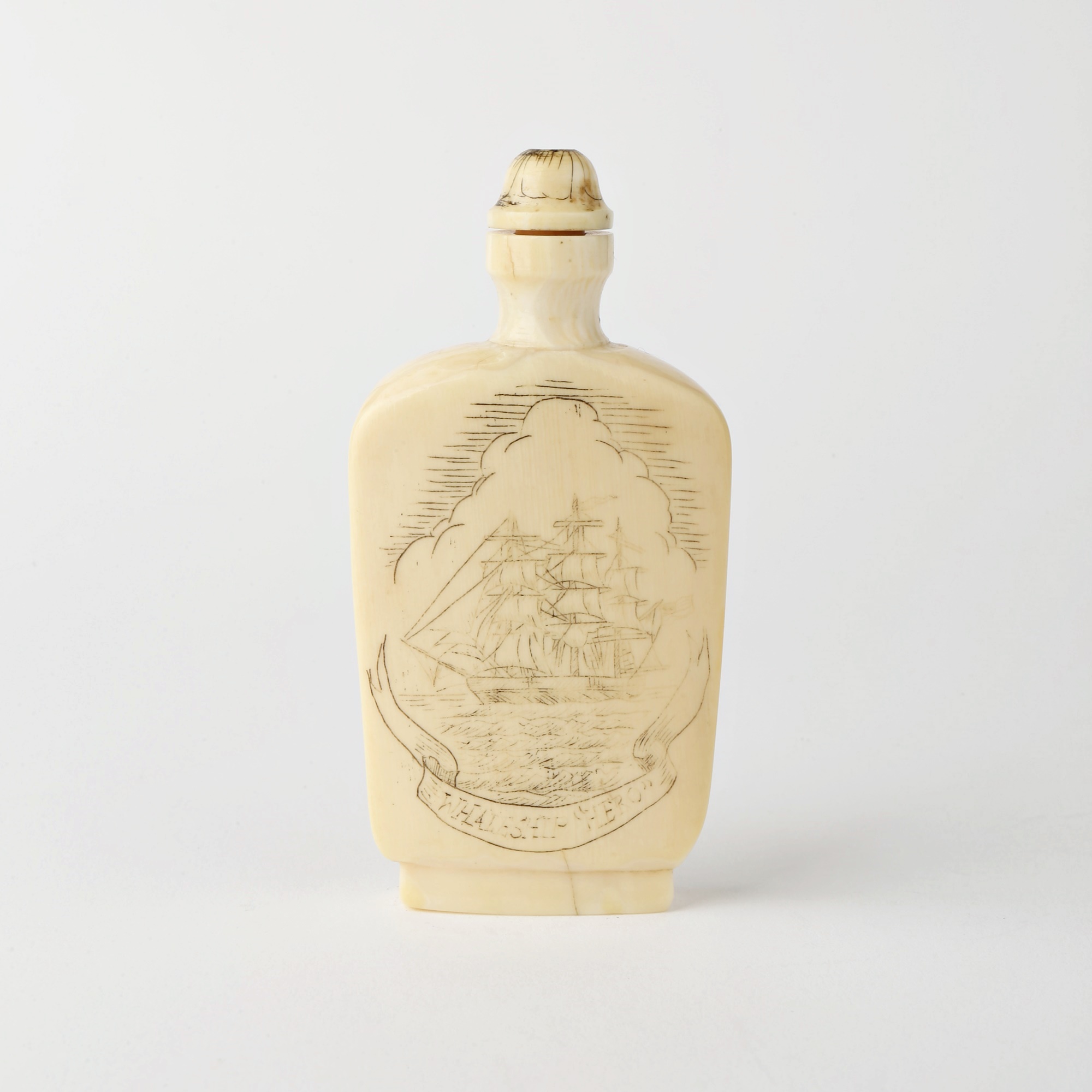
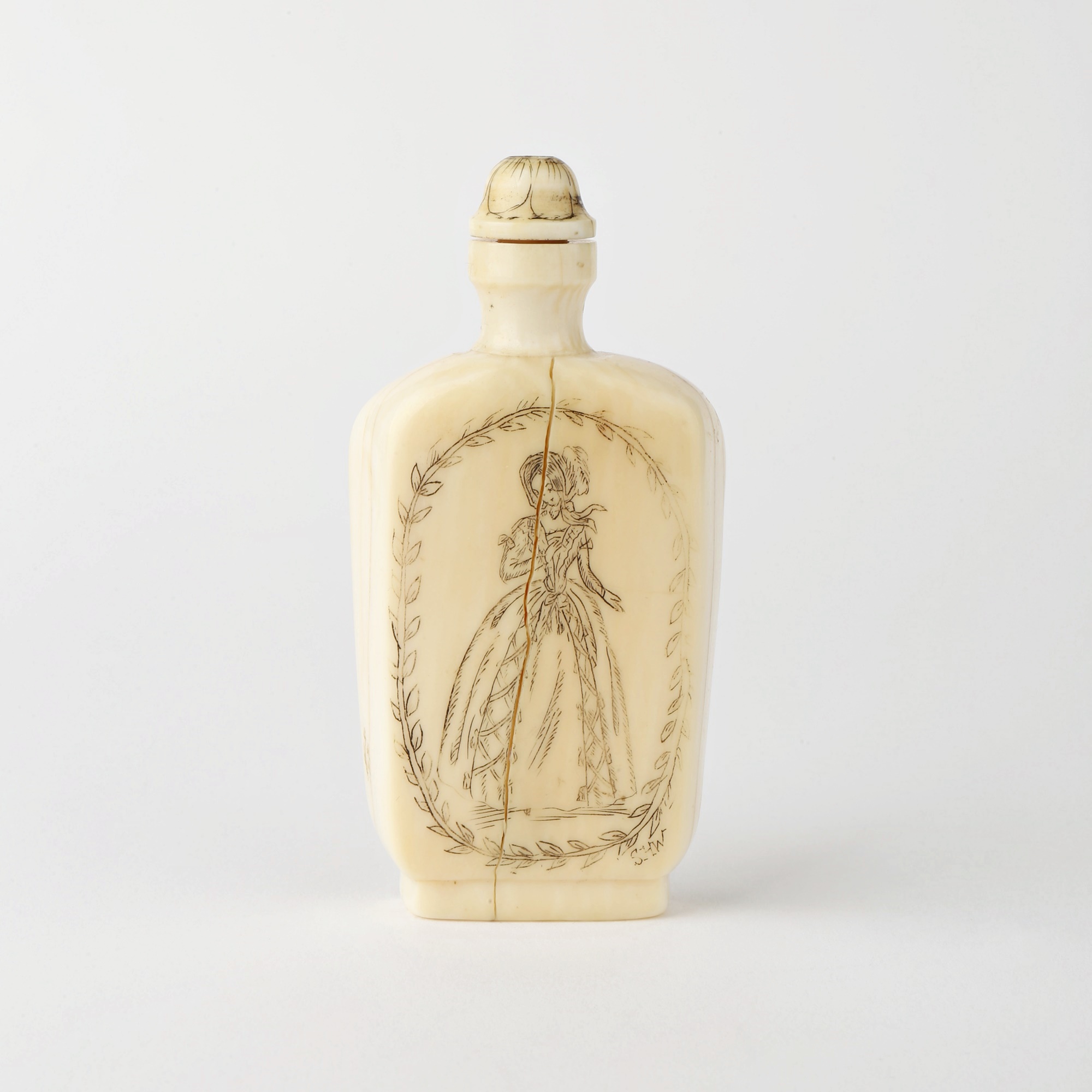
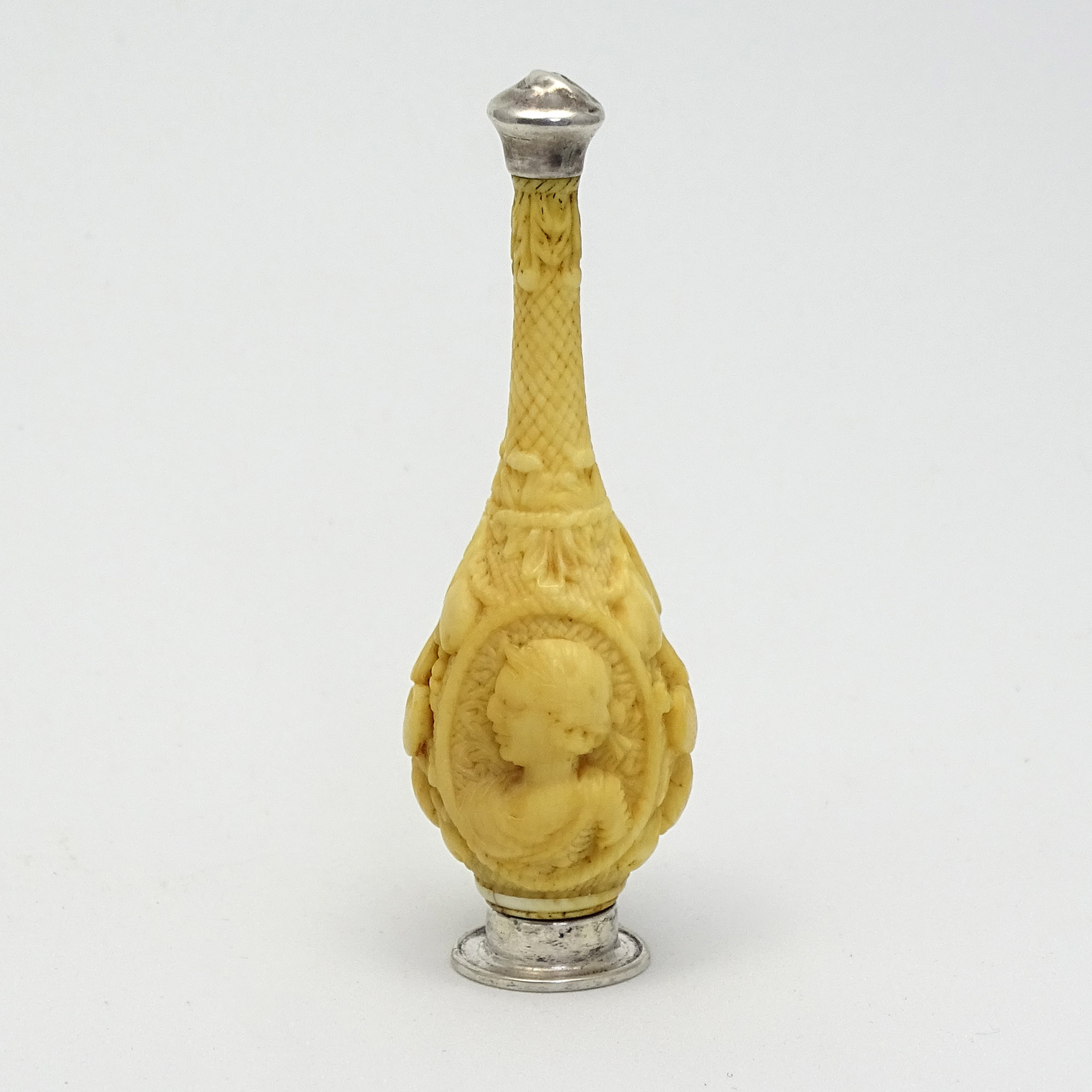
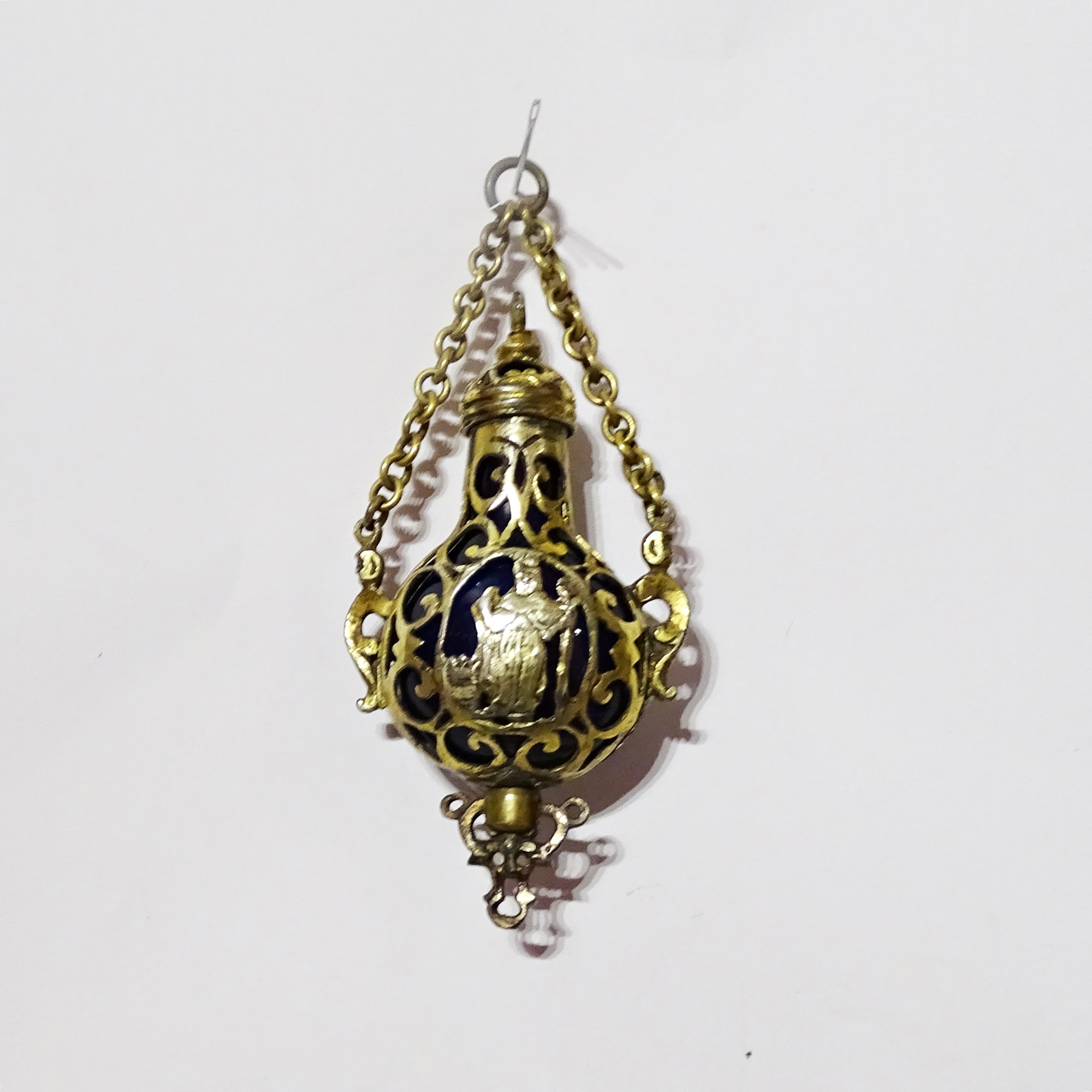
Sperm whale tusk scent bottle, made on board of a ship: on one side bears the inscription Whaleship “Hero” in a chart under a detailed drawn of a sailer; on the other side there is the portrait of a young lady in her gown and bonnet, surrounded by an oval wreath signed with the monogram. The whaling ship HERO was active in Nantucket in the 1840s according to the American naval registers I consulted.
Scrimshaw is a remarkable art form that emerged from the maritime world, carving its legacy into the bones and teeth of whales. Originating in the late 18th century, it was the creative outlet of sailors aboard whaling ships during their long, monotonous voyages. These sailors meticulously carved intricate designs, scenes, and even portraits into materials such as sperm whale bones, teeth, and baleen. The process involved using sailing needles or other sharp tools, with the motion of the ship influencing the level of detail. Scrimshaw pieces often depicted nautical motifs, whaling scenes, and portraits of loved ones. Beyond its artistic appeal, scrimshaw remains a testament to the resourcefulness and maritime culture of those who sailed the high seas.
Period
Late 19th century
USA, 1880 ca
material of animal origin
6 cm
COD.
23